
Ready for Takeoff
Research, Scholarship and News
With impact in everything from constitutional law and privacy rights to campaign finance reform and the environment, members of the Stanford Law School community shape law and policy through leading-edge research.

SLS Degree Programs


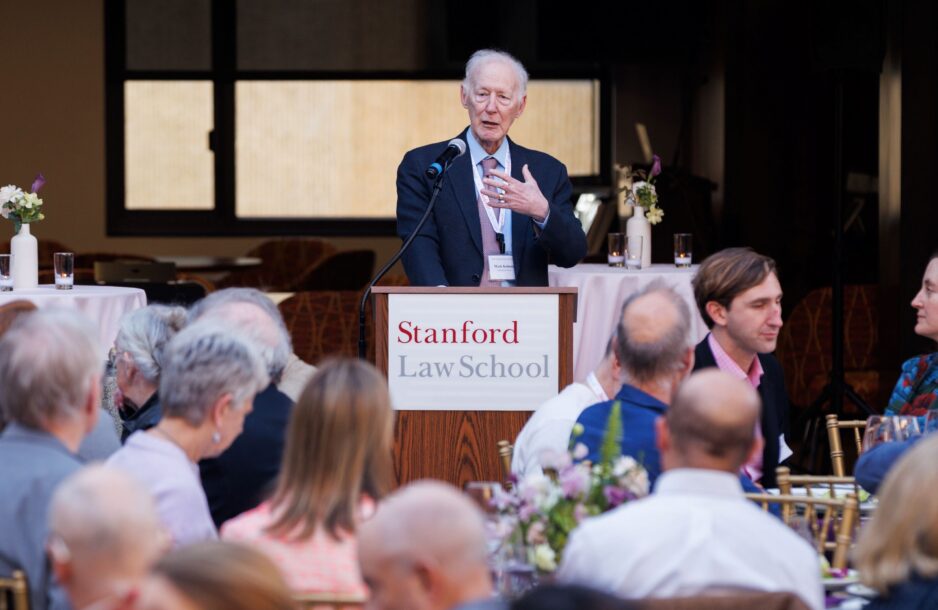
Join a diverse and inclusive community shaped by a commitment to the future.
Learn more : The JD Program
A hallmark of Stanford University and a distinct strength of Stanford Law, where students can explore the many ways law intersects with other fields.
Learn more : Joint Degree Programs
One-year master's degree programs and a doctoral degree (JSD) for international graduate students who have earned a law degree outside the United States.
Learn more : Advanced DegreesStanford Law Students Share Their Stories





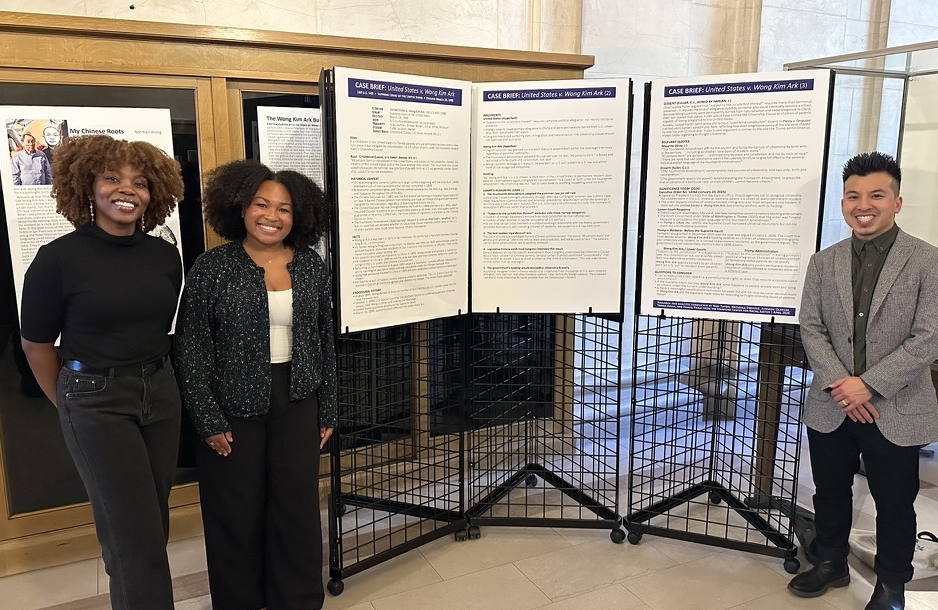
Stanford Center for Racial Justice | Bremond Fellows 2025-2026 Cohort

Connect with Us


Some of the Trump administration’s most consequential immigration changes aren’t the ones making headlines. On Stanford Legal, immigration law expert Lucas Guttentag joins host Professor Pamela Karlan to explain how hundreds of memos, directives and implementation shifts — many receiving ...little public scrutiny — are collectively reshaping the U.S. immigration system.
Guttentag, founder of the ACLU Immigrants’ Rights Project, also discusses the Immigration Policy Tracking Project he launched with law students to document each policy move and the related legal challenges.
Listen here: https://brnw.ch/21x3gR4



Students in Stanford Law School’s Policy Practicum: Governing Autonomous and AI Systems in Outer Space recently wrapped up a two-quarter project examining one of the more futuristic--and fascinating--questions in law and policy: how should U.S. governance keep pace with a space environment that ...is growing more congested, more complex, and more autonomous?
The lab originated with students at the Stanford Space Law Society, who proposed the course concept to lecturers Erik Jensen and Dinsha Mistree from the Neukom Center for the Rule of Law. Together, they worked to establish the course as part of Stanford Law School’s Policy Lab Program and brought together students from law, engineering, international policy, and business to explore new governance frameworks for outer space. Their client for this “only at Stanford Law” policy lab was the Aerospace Corporation, a nonprofit that advises the U.S. government on space enterprise and systems engineering issues.
In the “New Space” era, private companies are rapidly transforming Earth’s orbit into a crowded, commercially driven environment. Thousands of satellites are already in orbit, with many more expected in the coming years, all navigating around millions of pieces of fast-moving debris. As AI systems support collision avoidance, navigation, and other novel operations, the legal and policy questions become harder and more urgent.

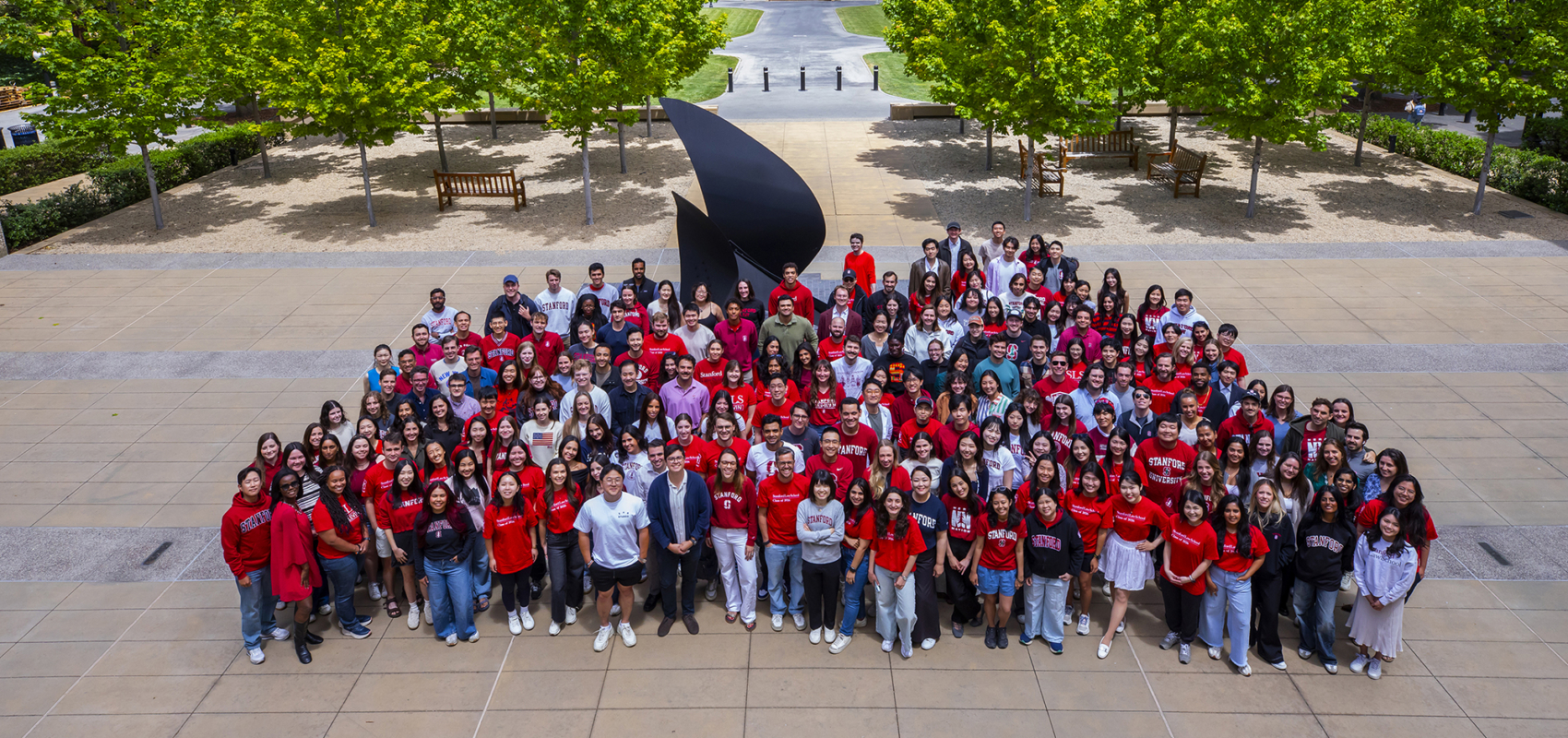
See how the Class of 2026 photo came to life 🎓

Students in Stanford Law School’s Policy Practicum: Governing Autonomous and AI Systems in Outer Space recently wrapped up a two-quarter project examining one of the more futuristic--and fascinating--questions in law and policy: how should U.S. governance keep pace with a space environment that ...is growing more congested, more complex, and more autonomous?
The lab originated with students at the Stanford Space Law Society, who proposed the course concept to lecturers Erik Jensen and Dinsha Mistree from the @Neukom Center for the Rule of Law. Together, they worked to establish the course as part of Stanford Law School’s Policy Lab Program and brought together students from law, engineering, international policy, and business to explore new governance frameworks for outer space. Their client for this “only at Stanford Law” policy lab was the Aerospace Corporation, a nonprofit that advises the U.S. government on space enterprise and systems engineering issues.
In the “New Space” era, private companies are rapidly transforming Earth’s orbit into a crowded, commercially driven environment. Thousands of satellites are already in orbit, with many more expected in the coming years, all navigating around millions of pieces of fast-moving debris. As AI systems support collision avoidance, navigation, and other novel operations, the legal and policy questions become harder and more urgent.