
Welcome Back
Research, Scholarship and News
With impact in everything from constitutional law and privacy rights to campaign finance reform and the environment, members of the Stanford Law School community shape law and policy through leading-edge research.





SLS Degree Programs
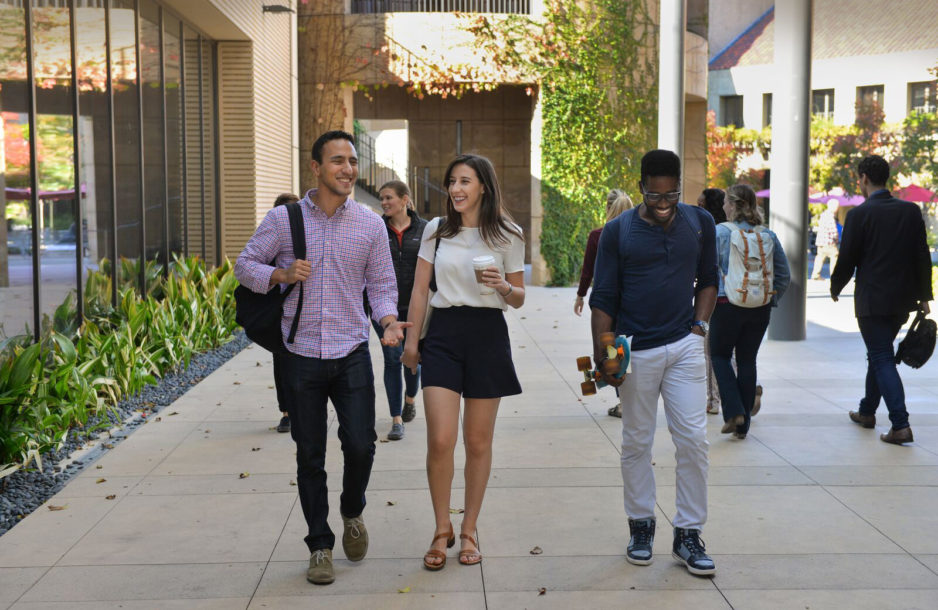

Join a diverse and inclusive community shaped by a commitment to the future.
Learn more : The JD Program
A hallmark of Stanford University and a distinct strength of Stanford Law, where students can explore the many ways law intersects with other fields.
Learn more : Joint Degree Programs
One-year master's degree programs and a doctoral degree (JSD) for international graduate students who have earned a law degree outside the United States.
Learn more : Advanced DegreesStanford Law Students Share Their Stories
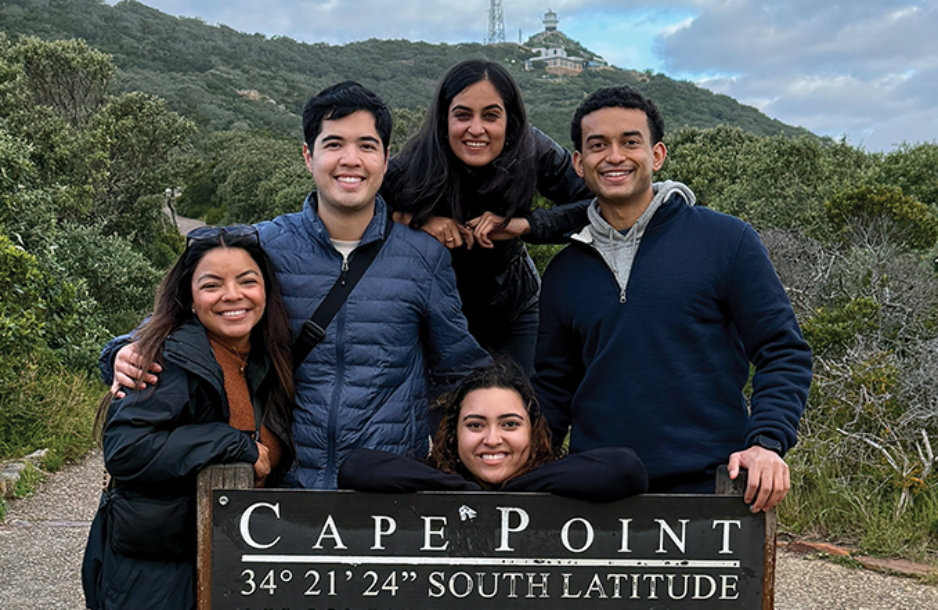





2026 LLM x Law Hackathon
The hackathon wasn’t just a competition; it was a glimpse into what becomes possible when the people who understand AI and the people who understand law are finally in the same room, building together.

Connect with Us

How did communities decide who was mentally competent to vote in 19th-century America?
On Sept. 28, Stanford Law School Professor Rabia Belt will explore this question at Berkeley Law, as part of a speaker series hosted by the Berkeley Law Center for the Study of Law & Society.
Read more
Her talk, “Mental Incompetence on the Ground: Community Construction of Disability in Democracy,” examines how neighbors, relatives and election officials shaped definitions of disability and access to the ballot.
Drawing from her book in progress, Belt will consider how local knowledge and social relationships influenced the everyday construction of American democracy.
Monday, Sept. 28, 2026 | 12:15-2 p.m.
RSVP:

Featuring Rabia Belt, Professor of Law and Professor of History (by courtesy), Stanford Law School Abstract: Who was mentally competent to vote?...
brnw.ch


Places to reflect, focus, or discuss are all around. Take a moment to enjoy them.
A law on the books in Memphis still calls for racially segregated schools. It’s one of thousands of old discriminatory provisions buried in local codes. Stanford Law's RegLab and HAI used AI to find them. Here’s what researchers uncovered:

(Originally published by The Stanford Institute for Human-Centered AI on September 8, 2026.) In Michigan, it is against the law for a non-citizen of
brnw.ch
A new report from the Stanford Space Law Society and Stanford’s Law & Policy Lab, in partnership with the Stanford Haas Center For Public Service and prepared for policy client The Aerospace Corporation, examines a defining challenge for the modern orbital environment: how to prevent Read morecollisions and assign responsibility as spacecraft operations become more autonomous.
"Governing Orbits: Collision Prevention and Liability in the Age of Autonomous Space Operations" explores how growing satellite constellations, on-orbit servicing, debris removal and proximity operations are reshaping space governance. The report was led by co-instructors Erik Jensen and Dinsha Mistree, with student lead Cody Wang.
As artificial intelligence enables spacecraft to make navigation and collision-avoidance decisions with less human intervention, existing legal frameworks face new questions about accountability, attribution and oversight.
Read the report: https://brnw.ch/21x5QGZ
#SpaceLaw #SpacePolicy #ArtificialIntelligence #OrbitalSafety