
New Beginnings
Research, Scholarship and News
With impact in everything from constitutional law and privacy rights to campaign finance reform and the environment, members of the Stanford Law School community shape law and policy through leading-edge research.


SLS Degree Programs
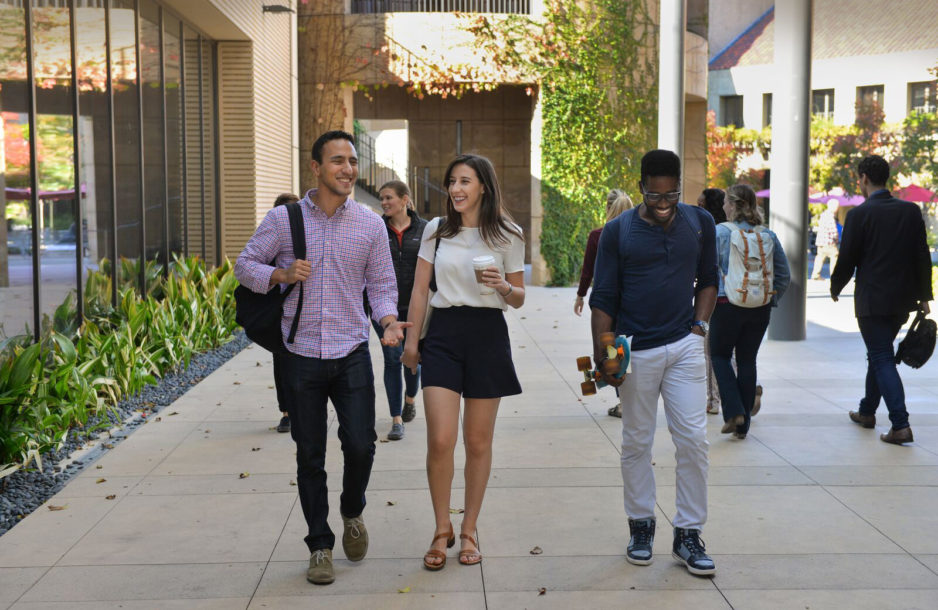

Join a diverse and inclusive community shaped by a commitment to the future.
Learn more : The JD Program
A hallmark of Stanford University and a distinct strength of Stanford Law, where students can explore the many ways law intersects with other fields.
Learn more : Joint Degree Programs
One-year master's degree programs and a doctoral degree (JSD) for international graduate students who have earned a law degree outside the United States.
Learn more : Advanced DegreesStanford Law Students Share Their Stories


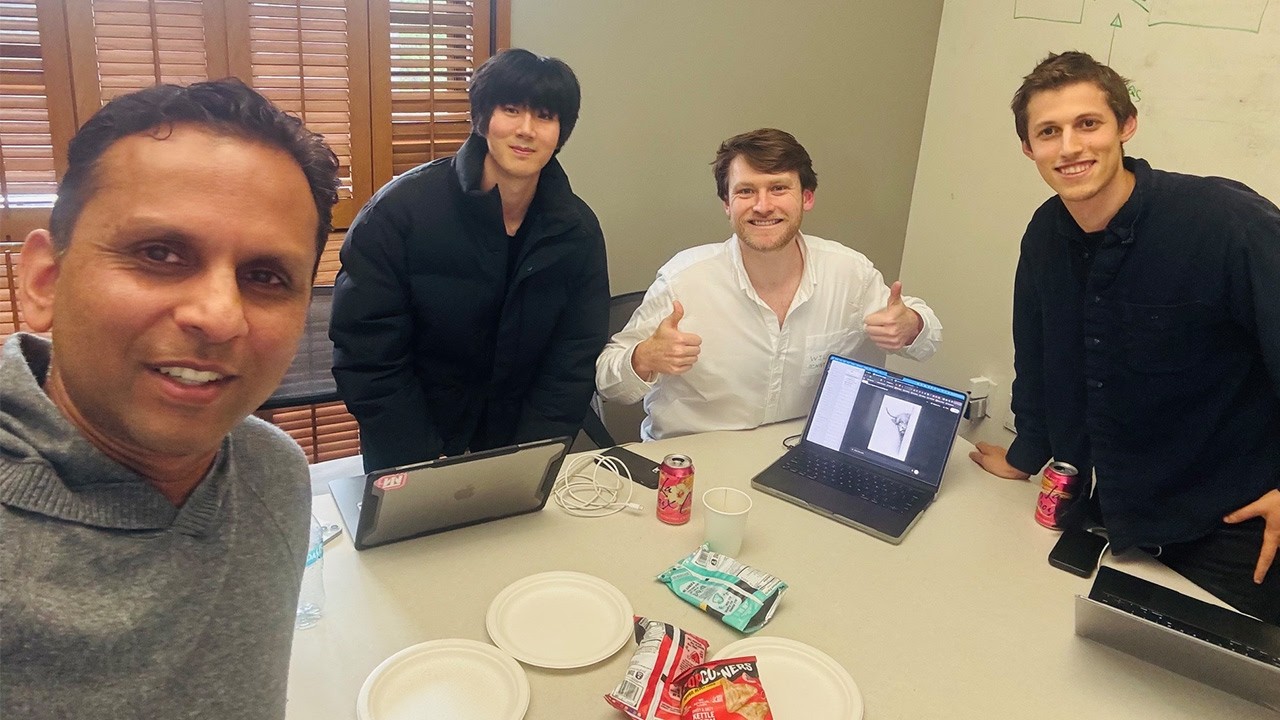
2026 LLM x Law Hackathon
The hackathon wasn’t just a competition; it was a glimpse into what becomes possible when the people who understand AI and the people who understand law are finally in the same room, building together.
Connect with Us




Stanford Law School research is at the center of a new Atlantic article examining what happens to political spending after fatal school shootings.
The study finds that pro-gun PACs sharply increase contributions to favored House candidates in competitive districts after children are killed... in school shootings. Eric Baldwin, Postdoctoral Research Fellow at Stanford Law School, led the study, along with co-authors John J. Donohue III, the C. Wendell and Edith M. Carlsmith Professor of Law, and Takuma Iwasaki, a Stanford Law JSD candidate.
“The data shows that the gun lobby saves its political firepower for the moments when public grief is greatest and lawmakers are under the most pressure to act,” Baldwin tells The Atlantic.
“School Shootings and the Strategic Contributions of Gun Policy PACs in U.S. House Elections” was published earlier this year in Proceedings of the National Academy of Sciences. Read it here: https://brnw.ch/21x5g5h
Read more in The Atlantic (subscription may be required): https://brnw.ch/21x5g5i
“The more daylight there is, the more trouble for Meta.”
In the closely watched federal trial now underway in Oakland, Professor Nora Freeman Engstrom says a key question is what the proceedings bring to light about any gap between Meta’s internal understanding of the risks to young ...users and what it told the public.
The case was brought by state attorneys general and centers on allegations that Meta designed Facebook and Instagram to keep young people compulsively engaged, misled the public about the risks, and collected data from children under 13 in violation of federal law.
In a new Q&A, Engstrom puts the case in context and explains why its outcome could matter well beyond this courtroom, with thousands of related lawsuits waiting in the wings. Read more:

(Originally published by Stanford Report on August 25, 2026.) Four states kicked off a closely-watched trial against Meta last week, alleging that the
brnw.ch
Technology can amplify division at extraordinary speed. Peacemaking in the Digital Age explored how to harness it to do the opposite.
Grande Lum, faculty director of the Martin Daniel Gould Center for Conflict Resolution, recently presided over the daylong conference, focused on how ...technology can help bridge divides. Co-hosted with the California Civil Rights Department’s Community Conflict Resolution Unit and Life Comes From It, a grant-making and movement-building organization, the event brought together experts in conflict resolution, civil rights, technology, media, and restorative justice.
Presenters included Colin Rule, CEO and president of Mediate(.com) and ODR(.com); Kia Sims, COO of AISHA AI, who discussed a chatbot designed with inclusivity and cultural relevance in mind; UCLA professor Sarah Roberts, on AI, media, technology, and civil society; University of Denver law professor Oladeji Tiamiyu, on digital art as a tool for healing and racial reconciliation; and William Froehlich, director of Ohio State Law School’s Divided Community Project, on using AI in community conflict resolution.