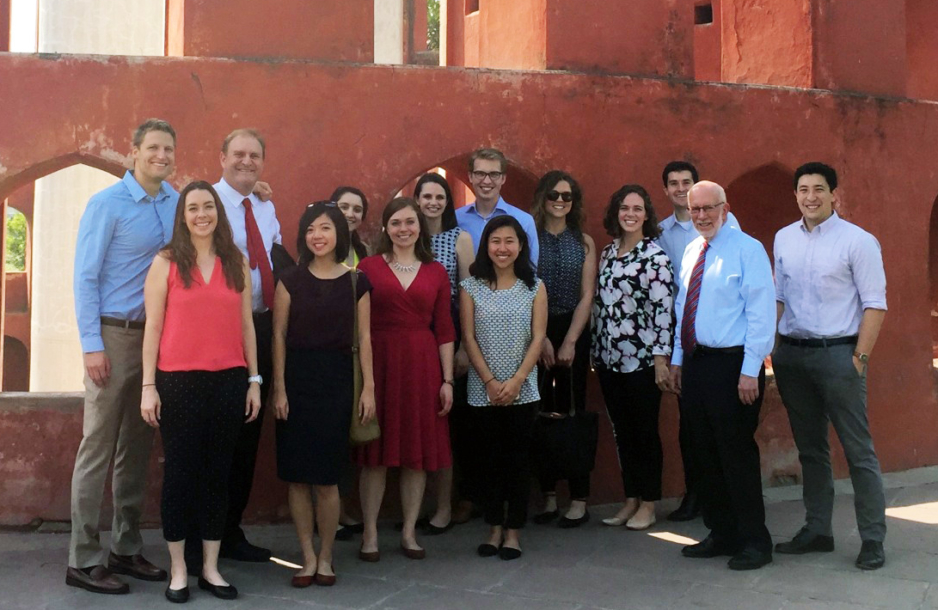
The John and Terry Levin Center for Public Service and Public Interest Law at Stanford Law School provides a rich resource for students who are interested in exploring or already committed to advancing the public good and achieving social justice through the law.
Stanford Law School offers an array of classes and clinics that provide students with a solid foundation of theoretical knowledge and practical skills to support the pursuit of careers in public interest. It also supports students pursuing careers in the public interest and public sector, through its pro bono program, externships, mentorships, career services, speaker series, and opportunities for financial assistance.
The Center houses public service and career services programs, and coordinates events ranging from skills training to public interest symposia to career panels. It also oversees a variety of public interest funding programs that tangibly support public interest and public sector students and alumni.
The groundwork provided through classes and clinics, and the opportunities created by the Center enable our graduates to achieve the careers and advance the causes that first inspired them to earn a law degree.
Diane T. Chin oversees the Levin Center`s career development, pro bono, externship, and mentoring programs. She also teaches, plans and coordinates public interest curriculum, and engages in external relations and fundraising. In 2007, she co-edited and contributed to Beyond the Big Firm: Profiles of Lawyers Who Want Something More, and she previously served as the Levin Center`s founding director in 2003. Prior to her return to Stanford, Diane was the Director of Equal Justice Works/West, the first regional office of that national organization, outside of its Washington, D.C., headquarters. Diane also served as Associate Director of the Thelton E. Henderson Center for Social Justice at the U.C. Berkeley School of Law and as the Executive Director for Chinese for Affirmative Action.
She began her law career as a staff attorney and Skadden Fellow for the Lawyers’ Committee for Civil Rights Under Law of the Boston Bar Association when she graduated from Northeastern University School of Law, and then as a staff attorney for the Lawyers’ Committee for Civil Rights of the San Francisco Bay Area. Later she worked as a housing attorney for Protection & Advocacy, Inc. and as a senior trial attorney for the Office of Citizen Complaints, San Francisco Police Commission. Diane was an adjunct member of the New College of Law faculty (Race and the Law, Constitutional Law). Her substantive areas of practice have been within the civil rights field (hate violence, police misconduct, affirmative action and housing discrimination). At Stanford, she serves as a Lecturer in Law, teaching Lawyering for Social Change and other courses.
Anna Wang is the Executive Director of the John and Terry Levin Center for Public Service and Public Interest Law. She directs four of the Center's five programs, which support law students interested in pursuing public interest careers through mentoring, financial support, co-curricular programs, and career counseling. Wang also oversees general operations and advises law students and alumni on public interest career strategies. She joined Stanford in 2004 after three years as the first Executive Director of Vision New America, a nonprofit civic leadership development organization in Silicon Valley. In addition to guiding the organization's development, she instituted new voter outreach efforts, launched leadership training programs, and developed a highly successful public policy internship program targeting high school and college students. Wang received her BA with honors from UCLA and a JD from UC Berkeley School of Law (Boalt Hall) in 2001. She is a member of the California Bar.
A veteran prosecutor with extensive federal court trial experience, de la Vega began her legal career as judicial clerk to U.S. District Court Judge Robert G. Renner in St. Paul, Minnesota. Following her clerkship, she became an Assistant U.S. Attorney in Minneapolis, serving there and in San Jose for a total of over twenty years. During her tenure, she prosecuted the full spectrum of federal criminal cases: white collar crime, tax and money laundering violations, RICO, continuing criminal enterprise, and the first federal prosecution of commercial airline pilots for “flying under the influence,” among others. She also briefed and argued cases before the Eighth and Ninth Circuit Courts of Appeals. The recipient of community and Department of Justice awards for her work - including a Director’s Award for Superior Performance as an Assistant U.S. Attorney – de la Vega was a member of the Organized Crime Strike Force and chief of the San Jose Branch of the U.S. Attorney’s Office. She has lectured on various aspects of substantive criminal law, investigation and trial practice in Continuing Legal Education programs, and taught law school courses in white collar crime and legal writing, as well as trial and appellate advocacy. A widely-published author, de la Vega speaks frequently to civic organizations and student groups, and appears in regional and national media as a legal expert on issues of criminal justice and public integrity.
Betsy provides training and support to student-run pro bono projects; assists in the cultivation of new pro bono partnerships; and develops programs to promote a culture of service at the law school and in the larger legal community. She also oversees the externship program, which enables second- and third-year students to combine fieldwork in nonprofit and government organizations with structured coursework or research directed by a member of the faculty.
Chip Pitts has taught courses on ethical globalization, corporate social responsibility and sustainable development, and international business and human rights at Stanford Law School, Oxford University, and elsewhere. Formerly an adjunct then full-time professor at Southern Methodist University Law School in Dallas, he has also been a partner at the global law firm Baker & McKenzie, then Chief Legal Officer of Nokia, Inc., and an investor, founding executive, and consultant to various start-up businesses in Austin, Texas and Silicon Valley.
Mari Zellner counsels law students and alumni exploring international and government employment, ranging from summer placements and externships to permanent career opportunities. She helps those interested in unique legal markets to develop job-search strategies, discover or create new career options, and utilize the Levin Center's relationships with international legal employers, public sector legal employers, and Stanford University alumni.
After completing her BA at Pomona College in 1997, and graduating with her JD and a Public Service Distinction from Harvard Law School in 2000, Mari began direct client representation at the Legal Aid Society of Minneapolis, practicing housing and housing discrimination law until 2003, and then immigration law. She moved to California with her family in 2006 to become a bilingual staff attorney at Bay Area Legal Aid, addressing the legal needs of survivors of domestic violence as a Registered Legal Service Attorney. In 2007, Mari began managing a complex caseload of immigration detention and removal cases, primarily for survivors of violent crime, and for clients seeking humanitarian-based relief, at Community Legal Services in East Palo Alto, where she currently serves as the Immigration Program Director part-time.
Nancy is the primary contact for the Levin Center and provides administrative and coordination assistance on a wide variety of projects, including coordinating the logistics of public interest events, trainings, and symposia. She is responsible for day to day financial management including accounting and summer public interest funding program and managing all marketing and communication needs. In addition she updates and maintains all Levin Center databases for funding, externships, and mentor programs. Prior to coming to Stanford, Nancy spent over 25 years as a retail executive for several national retailers.
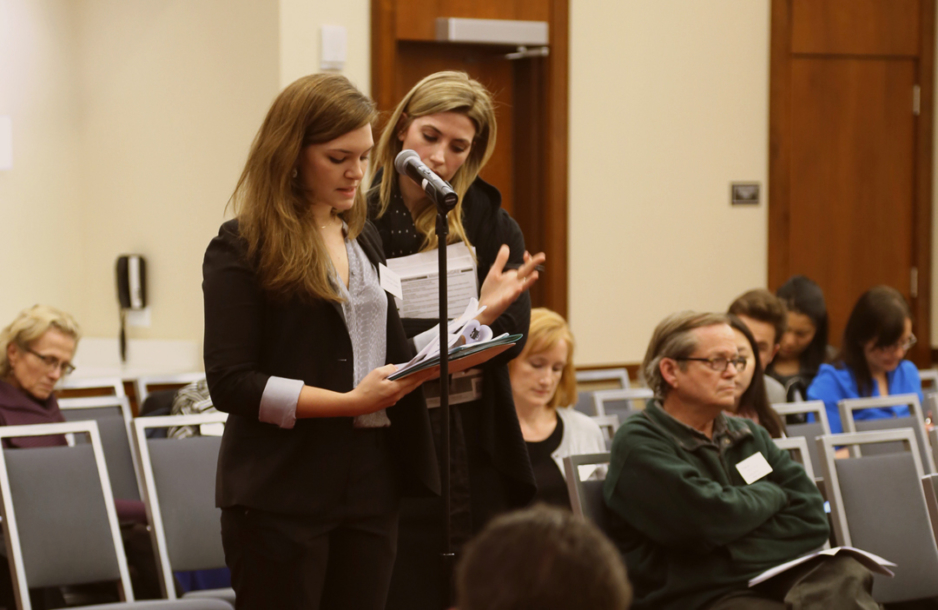
Each year, a number of conferences are held at the Law School. In the fall, the student-run Shaking the Foundations: The West Coast Conference on Progressive Lawyering is held at Stanford. The conference brings together law students, practitioners, and academics from around the country who share a commitment to use the law for positive, progressive social change. Through panels, workshops and speakers, it is designed to provide a forum for advocates and law students to discuss innovative strategies and solutions to the world's most pressing social justice issues.
Among the many Stanford student organizations, the following organizations are generally regarded as invaluable resources for public interest law students.
The Public Interest Law Students Association is a group of Stanford Law Students engaged in improving public interest opportunities and promoting a culture of public service work at Stanford Law School. PILSA works to bring students together to share information, experiences and ideas about pursuing study and work in public interest law.
PILSA also works to increase communication between public interest students and the faculty and administration, and throughout the year PILSA members advocate public interest issues in meetings with the faculty and administration.
Shaking the Foundations is an annual student-organized conference convened at Stanford that brings together law students, practitioners, and academics from around the country who share a commitment to use the law for positive social change. Through panels, workshops, and speakers, the conference provides a forum for advocates and law students to discuss innovative strategies and solutions to the world's most pressing social justice issues.
Founded in 1978, the Stanford Public Interest Law Foundation (SPILF) is a non-profit organization of Stanford law students and alumni/ae. SPILF was formed to fund public interest law projects providing services to groups that traditionally have not had adequate access to legal representation. SPILF hosts an annual student-organized auction to raise funds to support Stanford law students doing public interest summer law internships and to provide direct grants to legal public interest projects.
Street Law's mission is to empower Bay Area incarcerated and at-risk youth by teaching classes about the law, focusing on criminal procedure and a juvenile's legal rights.
Street Law participants volunteer their time to team-teach youth once a week for 10 weeks.
Many other student organizations engage in activities to support public interest at the law school.