
Legal Education for Tomorrow’s World
Research, Scholarship and News
With impact in everything from constitutional law and privacy rights to campaign finance reform and the environment, members of the Stanford Law School community shape law and policy through leading-edge research.


SLS Degree Programs


Join a diverse and inclusive community shaped by a commitment to the future.
Learn more : The JD Program
A hallmark of Stanford University and a distinct strength of Stanford Law, where students can explore the many ways law intersects with other fields.
Learn more : Joint Degree Programs
One-year master's degree programs and a doctoral degree (JSD) for international graduate students who have earned a law degree outside the United States.
Learn more : Advanced DegreesStanford Law Students Share Their Stories






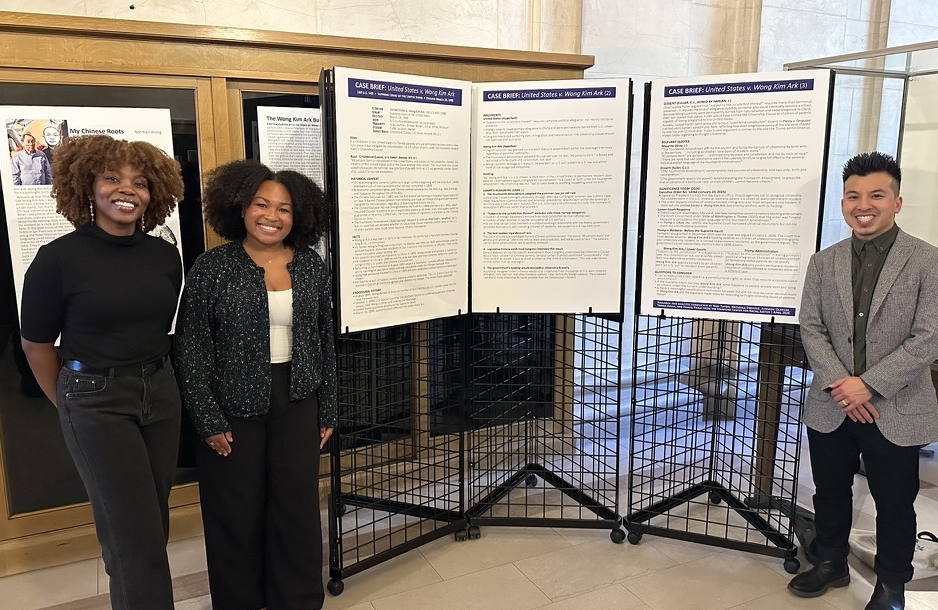
Stanford Center for Racial Justice | Bremond Fellows 2025-2026 Cohort

Connect with Us


Meet Lejla Tuholjaković, LLM ’26. A Bosnian-Austrian lawyer originally from Bosnia and Herzegovina, Lejla built her legal career in Austria before coming to Stanford Law School. During her time at SLS, she served as Financial Officer of the International Law Society, worked as a Research ...Assistant on Sustainable Finance and Carbon Markets, and was an Associate Editor of the Stanford Journal of Law, Economics & Business. Lejla completed the Corporate Governance & Practice LLM track and now heads to New York as she transitions into the U.S. legal market.


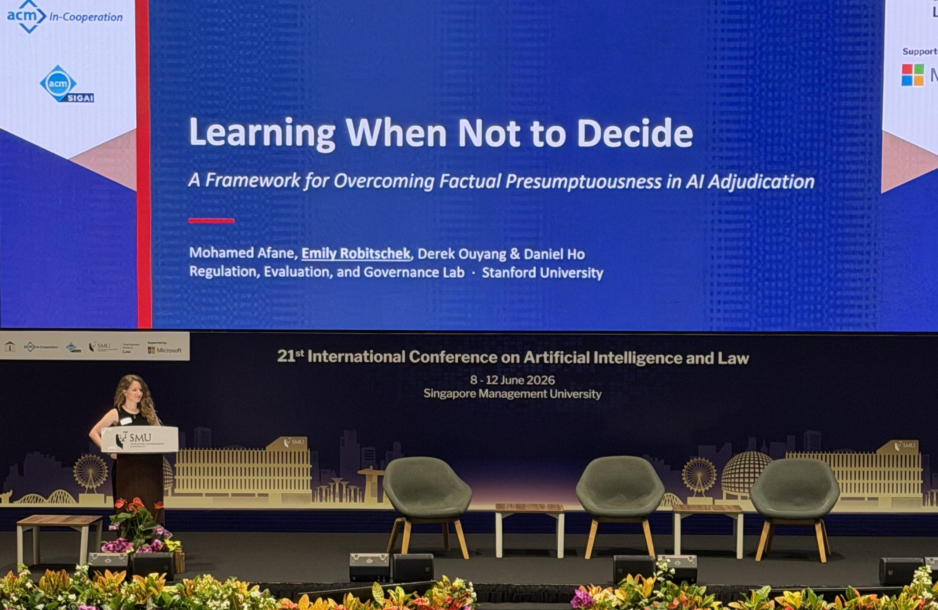
Congratulations to Stanford Law School’s RegLab and the Colorado Department of Labor and Employment on receiving an inaugural AI in Action Award from the Center for Civic Futures.
The award-winning tool, developed by CDLE and RegLab, uses AI to support one of the most demanding parts of ...the unemployment adjudication process. It helps adjudicators spot gaps in the record and identify the follow-up questions needed to resolve a claim.
The project was recognized in the “Rising AI Pilot” category for its responsible implementation, rigorous evaluation, and practical approach to government innovation.
Read more: https://brnw.ch/21x3FZW

What does it actually take for democracy to work? Stanford Legal took up the question in the opening episode of the eight part series: The Declaration at 250.
In the first episode we hear from former Secretary of State Condoleezza Rice and historian David Kennedy. Rice argued that the ...Declaration of Independence marked the end of tyranny, not the birth of democracy. The work that follows, she said, depends on durable institutions: a workable balance among branches of government, an independent judiciary and, often most crucially, a vibrant civil society that can channel protest into law, governance and everyday problem-solving.
Kennedy traced the Declaration’s promise of equality as principle, observed condition, aspiration and enforceable law — and warned about declining trust in institutions and in one another.
Tune in: https://brnw.ch/21x3DYj
