International Human Rights and Development Clinic

Overview

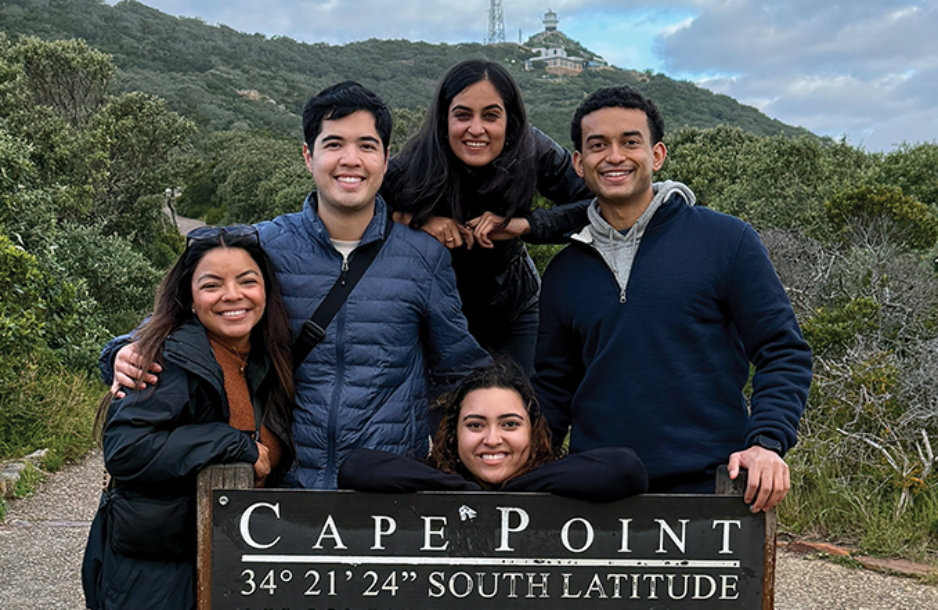
The International Human Rights and Development Clinic is the first of several international programs the Stanford Mills Legal Clinic expects to create in the next few years. This year Stanford Law School (SLS) launched an exciting new partnership with the University of Cape Town Law School to bring Stanford Law students to Cape Town South Africa for the quarter to participate in an international human rights and development clinical program. The program includes a one-week intensive course at SLS prior to departure, followed by an in-country portion of the program, which lasts the duration of a quarter, approximately 12 weeks. Once at the University of Cape Town, students are placed on projects with the Law Race and Gender Unit under the direction of Professor Dee Smythe.

Projects

2009-10 Projects with the University of Cape Town

This year, students will travel to Cape Town, South Africa to work with the Law Race and Gender Unit for the duration of the quarter on the Rural Women's Action-Research Project. The Project seeks to support struggles for change by rural women in South Africa who are engaged in struggles for change and to document actual and changing social practices to use this as evidence of "living law" in litigation and policy debates about customary law and women's land rights. The Project focuses on land rights, but includes related issues of inheritance, succession, marriage and women's standing and representation. The paucity of such evidence often means that codified versions of patriarchal customary law triumph by default. Evidence of women enforcing their rights under living law also serves to inspire women in other areas. Legal interventions are guided and directed through consultation and research with rural women in identified localities and these outcomes are recorded as part of the research output. The unit also assists rural women and community based organizations and nongovernmental organizations to make submissions to parliament and to intervene in policy debates.

The Project builds on prior research and litigation challenging the constitutionality of the Communal Land Rights Act (CLRA) and Traditional Leadership and Governance Framework Act (TLGFA), and research and litigation about the articulation between women's rights and customary law in relation to marriage, inheritance, and succession to chieftainship. Experience in the customary law arena points to both the danger of reactionary versions of customary law being used to close down processes of transformative change at the local level, and of the potential in recent South African Constitutional Court judgments interpreting customary law to be "living law" that develops as society changes. Partnerships are based on existing relationships with rural people, non-governmental organizations (NGOs) and community-based organizations (CBOs).

Students will research and prepare reports on statutes, case law and customary law. They may be required to monitor parliamentary hearings and prepare submissions on key issues, visit field sites in other provinces, prepare discussion documents for and brief project partners, and respond to pressing legal issues as they arise. Current issues include the Traditional Courts Bill (currently before Parliament), facilitating rural women's responses to proposed amendments to the Recognition of Customary Marriages Act, challenges to the resurgent imposition of chiefly levies, and support for female claimants to chieftainships.

2007-09 Namibia Projects

In 2007, Visiting Professor Barbara Olshansky and then Teaching Fellow Kathleen Kelly launched the International Human Rights Clinic's Namibia program, which allowed Clinic students the opportunity to spend the Spring Quarter participating in human rights work on the ground in Namibia, a flourishing democracy in southern Africa, only 18 years out of Apartheid. Students worked closely with the University, the Ministry of Justice, and various NGO partners on a variety of projects including a strategic plan for the University of Namibia Katutura Legal Aid Clinic, a case on behalf of HIV positive women who had been forcibly sterilized, a case on behalf of community members who were fighting for sufficient access to water, a technological needs assessment of the Namibian magistrates, drafting implementing legislation for the Convention Against Torture, and preparing a report on the issue of mining in protected lands.

2008-09 Humanitarian Law Projects

In the fall of 2008, the International Human Rights Clinic incorporated work on the war on terror and its humanitarian aftermath. Students worked on challenges to the legality of military detention without charge or trial in U.S.-operated prison facilities in other countries (including representing the lead claimant before the D.C. District Court in the landmark case of Al Maqaleh v. Gates), resettlement applications for former U.S. detainees and political prisoners seeking refuge in third countries, and coordinating international teams of medical and psychological experts to provide free services to former detainees and their families and train local public health personnel on how to provide such services on an on-going basis.

2005-07 Ghana Projects

In prior years, the overseas program has focused on investigating the effectiveness of the complex, volunteer dispute resolution system in Buduburam, a 17-year old Liberian refugee camp located outside of Accra, Ghana. In the winter quarter of 2007, eight students studied with Professor Maude Pervere and J.S.D. student and Instructor Tehila Sagy examining political structure of the refugee camp, its legal context within the U.N. system and refugee law, working on dispute resolution skills, and beginning their communications with camp leaders. Later on, in March of 2007, the students and their leaders traveled to Ghana to work in the Buduburam Refugee Camp to apply what they had learned during the year.

News & Press

News

Press Releases

  • Stanford Law School’s International Human Rights Clinic Files Lawsuit on Behalf of Tunisian Man Detained at U.S. Air Base Prison in Bagram, Afghanistan
    December 10, 2008
    Related: International Human Rights and Development Clinic
  • Boumediene v. Bush Ruling Paves Way for Stanford Law School’s International Human Rights Clinic Work on “War on Terror” Detentions
    June 12, 2008
    Related: International Human Rights and Development Clinic
  • Stanford Law School's International Human Rights Clinic Files Lawsuit on Behalf of Journalist Detained by U.S. Military in Bagram, Afghanistan
    June 03, 2008
    Related: International Human Rights and Development Clinic
  • Faculty

    Lecturers

    Kathleen A. Kelly
    Clinical Lecturer
    650 721.5885

    Clinic Contacts

    Kathleen A. Kelly
    Clinical Lecturer
    650 721.5885

    Recorded & Past Events

    March 2009

    January 2008

    October 2007

    March 2007

    Contact Information

    International Human Rights and Development Clinic
    Stanford Law School
    559 Nathan Abbott Way
    Stanford, CA 94305
    650-721-5885

    Related Media