



Supreme Court Litigation Clinic

Overview

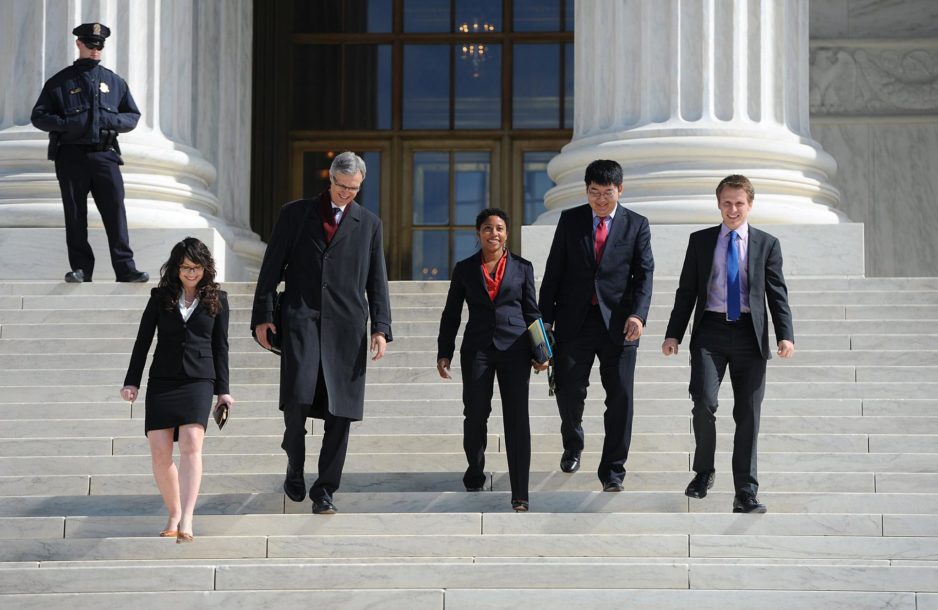
Stanford’s Supreme Court Litigation Clinic—the first of its kind at any law school—gives students the opportunity to explore a realm few lawyers experience in their careers: the Supreme Court of the United States. Under the direction of professors Pam Karlan and Jeff Fisher and lecturers Tom Goldstein, Amy Howe, and Kevin Russell, clinic members work on real Supreme Court cases, representing parties and amici curiae.

Unlike other Stanford clinics, which concentrate on one substantive area of the law, the Supreme Court clinic focuses on the wide range of legal issues decided by the nation's highest court. In the past several terms, the clinic has represented a wide variety of clients, such as: workers raising claims under federal anti-discrimination laws, the Civil Service Reform Act, and the Fair Labor Standards Act; criminal defendants with constitutional claims under the Fourth, Fifth, Sixth, and Eighth Amendments; and various public interest and trade associations, ranging from the California Medical Association, to the National School Boards Association, to the National Women’s Law Center. The clinic also has been involved in cases concerning the free exercise of religion, bankruptcy law, the Voting Rights Act, the First Amendment's Free Speech Clause, and international treaties. It has compiled a record at both the certiorari and merits stages that would be the envy of any appellate practice. Over the past five years, the clinic has represented parties as lead counsel in over two dozen cases on the merits, winning a majority of those cases.

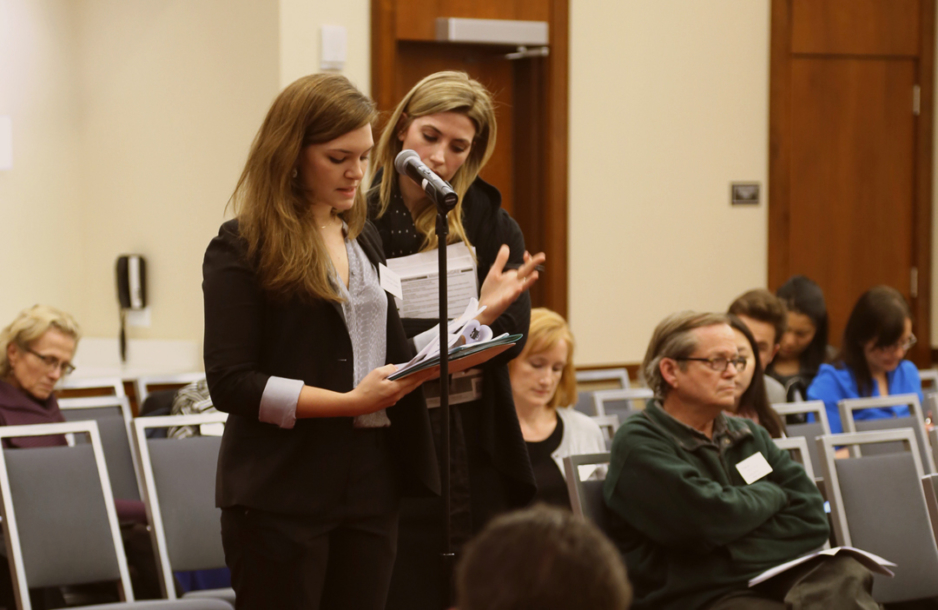
Students prepare briefs and other filings, participate in moots for oral arguments, meet with Court personnel and reporters, and get a real feel for how the High Court operates. The clinic is known as particularly writing-intensive; students typically work in shifting teams to produce at least three briefs over the course of a semester. Clinic alumni have gone on to a variety of clerkships, public-interest fellowships, positions in the Department of Justice, and jobs at private law firms.

"As a solo practitioner, I get used to my own way of doing things, but working with the incredible Stanford team taught me new ways. I think I will forever be a better appellate advocate as a result of their hard work."

– Sharon Samek '87, who worked on a case with the clinic.

"The process of working with the Stanford clinic is in a sense much more deliberative and more inclusive than working with other attorneys. .. . . I think they're building the next generation of great lawyers."

– Ben Cohen, of the Louisiana Capital Appeals Project, in Stanford Law Clinic Shakes Up Supreme Court Bar, Law 360, Sept 15, 2009.

Recent filings and developments

  • September 23, 2009: Clinic files petition for certiorari in Dolan v. United States, presenting the question whether federal courts have the power to enter restitution orders after the statutory time for doing so has expired.
  • August 5, 2009: Clinic files petition for certiorari in Magwood v. Culliver, concerning the constitutionality of a death sentence a federal court of appeals reinstated against an Alabama prisoner, after he obtained federal habeas corpus relief on the grounds that the Alabama courts unforeseeably and retroactively changed state law in order to sentence him to death, and that his counsel was constitutionally ineffective.
  • June 29, 2009: Court grants clinic's petition for certiorari in Abbott v. Abbott, presenting the question whether the Hague Convention on International Child Abduction requires the United States to return a child to his country of habitual residence when one parent takes the child to this country in violation of the other parent's legal right to prevent the child from being taken without his or her consent.
  • June 25, 2009: Court rules 5-4 for the clinic's client in Melendez-Diaz v. Massachusetts, holding that the Sixth Amendment's Confrontation Clause prohibits the prosecution in a criminal case from introducing a forensic laboratory report in place of live testimony from the analyst who performed the testing. The ruling requires most states across the country to adjust their practices in this area. See coverage in the New York Times, the Washington Post (here and here) and SCOTUS Blog
  • May 18, 2009: Court rejects clinic's position in AT&T v. Hulteen, holding that employers do not violate the Pregnancy Discrimination Act by giving women smaller pensions based on pregnancy leaves they took prior to the Act's enactment. See coverage in the New York Times.
  • May 18, 2009: Clinic files petition for certiorari in Sossamon v. Texas, presenting the question whether individuals may sue state officials for damages for violations of the Religious Land Use and Institutionalized Persons Act of 2000 (RLUIPA).
  • May 15, 2009: Clinic files petition for certiorari in Burkey v. Marberry, involving whether a federal prisoner's petition for habeas corpus becomes moot when the Bureau of Prisons releases him from custody but continues to exercise control over him in the form of supervised release.
  • May 13, 2009: Clinic files petition for certiorari in Daniels v. Washington, which involves the Double Jeopardy Clause's limitations on re-prosecuting individuals for offenses after juries in their first trials found them guilty only of lesser charges.
  • May 4, 2009: Court rules unanimously for clinic's client in Flores-Figueroa v. United States, holding that a person does not violate the federal aggravated identity theft statute if he uses a false identification but does not know that it belongs to another person. See coverage of the decision's criminal law and immigration ramifications here and here in the New York Times.
  • April 28, 2009: The Court rules 6-3 for the clinic's client in Cone v. Bell, holding that lower federal courts improperly rejected a death row inmate's claim for habeas relief based on the prosecution's suppression of key evidence and its misrepresentations to state and federal appellate courts regarding the case's procedural history. See coverage in the Washington Post.
  • April 21, 2009: The Court, in Arizona v. Gant, follows the argument the clinic advanced in an amicus brief for the National Association of Criminal Defense Lawyers and holds that the Fourth Amendment permits police officers to search someone's car after arresting and handcuffing him only if the officers have reason to believe the car contains evidence of the crime giving rise to the arrest. The decision significantly enhances individual privacy over previously existing law. See coverage in the New York Times.
  • March 25, 2009: Clinic files amicus brief on behalf of House Judiciary Committee Leadership in Northwest Austin Municipal Utility Dist. No. 1 v. Eric Holder, defending the constitutionality of the provisions of the Voting Rights Act that require certain jurisdictions across the country to obtain preclearance from the Department of Justice before changing voting practices or procedures.
  • March 25, 2009: Clinic files amicus brief on behalf of the ACLU, the Mexican-American Legal Defense and Education Fund, and LatinoJustice PRLDEF in Ricci v. DeStefano, arguing that employers' decisions to abandon job tests that have disparate effects on minority workers do not violate the Equal Protection Clause.
  • March 20, 2009: Clinic files petition for certiorari in Dunphy v. United States, presenting the question whether courts may impose sentences below the ranges dictated by the Federal Sentencing Guidelines when resentencing offenders pursuant to retroactive amendments to the Guidelines, such as the amendments reducing the disparity between crack and power cocaine offenses.
  • February 2, 2009: Clinic files amicus brief on behalf of Eleven Individuals Who Obtained Clemency Through DNA Testing in District Attorney's Office v. Osborne, arguing that prisoners have a constitutional right of access to biological material within a state's control when performing DNA testing on that material could demonstrate the prisoners' innocence.
  • January 14, 2009: Court rules against clinic's client and holds 5-4 that the Fourth Amendment does not require courts to suppress evidence that the police obtain pursuant to unlawful arrests caused by negligent recordkeeping. See coverage in New York Times and USA Today.
  • January 13, 2009: The Court rules unanimously for the clinic's client in Jimenez v. Quarterman, holding that the time period for seeking federal habeas corpus relief restarts when a state prisoner has his direct appeal reinstated by state courts.
  • January 5, 2009: Clinic files petition for certiorari in Navajo Nation v. United States Forest Service, asking the Court to clarify—in the context of a Native American sacred site— when governmental action "substantially burdens" the free exercise of religion and thus triggers the Religious Freedom and Restoration Act.
  • December 23, 2008: Clinic files amicus brief on behalf of National Association of Criminal Defense Lawyers in Kansas v. Ventris, which concerns whether the prosecution may introduce statements obtained in violation of the accused's Sixth Amendment right to counsel against him as impeachment evidence. The brief highlights the dangers of "jailhouse snitch" testimony, the specific type of evidence at issue in the case.
  • November 10, 2008: Clinic files brief in opposition to certiorari in Polar Tankers v. City of Valdez, Alaska, a case presenting the question whether a municipal property tax on oil tankers runs afoul of the Tonnage Clause, the Commerce Clause, or the Due Process Clause of the Constitution.
  • November 6, 2008: Clinic files an amicus brief in support of certiorari on behalf of various consumer rights and civil rights groups in Cuomo v. The Clearing House Ass'n, L.L.C., which involves whether the federal government may prohibit states from enforcing state laws that prohibit predatory and discriminatory lending practices.
  • October 20, 2008: The Supreme Court grants the clinic's petition for certiorari in Flores-Figueroa v. United States, which presents the question whether a person can be found guilty of aggravated identity theft for using what he believes is a fictitious social security number, rather than the number of another person. See coverage in the New York Times and on SCOTUSBlog.
  • October 15, 2008: Clinic files petition for certiorari in Mitchell v. Rees, involving whether a litigant may seek to alter or amend a previous decision under Federal Rule of Civil Procedure 60(b) more than one year after the decision became final by showing that the decision involved an admitted legal error and extraordinary circumstances that prevented the litigant from seeking relief sooner.
  • July 25, 2008: Clinic files amicus brief on behalf of the National Association of Criminal Defense Lawyers in Arizona v. Gant, arguing that the Fourth Amendment prohibits police officers from conducting a warrantless search of a vehicle incident to arresting the driver for a traffic offense.
  • July 22, 2008: Clinic files petition for certiorari in Flores-Figueroa v. United States, presenting the question whether an individual, in order to be convicted of aggravated identity theft, must know that an identification he used without legal authority actually belonged to another person. See coverage on SCOTUSBlog.
  • June 25, 2008: Court accepts clinic's argument in Kennedy v. Louisiana, and holds that the Eighth Amendment does not allow the death penalty to be imposed for any crime against an individual in which the victim does not die. The ruling invalidates capital child rape laws in Louisiana and five other states. See coverage in the New York Times and SCOTUSBlog.
  • June 23, 2008: Court rules for the clinic in Greenlaw v. United States, holding that courts of appeals may not increase criminal defendants' sentences when the government does not appeal those sentences. See coverage on SCOTUSBlog.
  • June 23, 2008: Court grants clinic's petition for certiorari in Cone v. Bell, involving the ability of a defendant sentenced to death to challenge the State's suppression of evidence at his trial. See coverage in the New York Times and SCOTUSBlog.
  • June 23, 2008: Court grants certiorari in AT&T v. Hulteen, presenting the question whether federal anti-discrimination law, as amended by the Pregnancy Discrimination Act of 1978, allows companies, when calculating seniority for purposes of paying current pension benefits, to award less service credit for pre-1978 leaves of absence due to pregnancies than for pre-1978 leaves due to other medical conditions and temporary disabilities. The clinic represents the respondents. See coverage in the Washington Post and SCOTUSBlog.
  • June 23, 2008: Court denies certiorari in Dillard County v. Chilton, a voting rights case in which the clinic successfully represented the respondents.
  • June 19, 2008: Court rules for the clinic in Meacham v. Knolls Atomic Power Laboratory, holding that an employer, not an employee, bears the burden under the Age Discrimination in Employment Act of proving that it fired employees based on "reasonable factors other than age." See coverage in the New York Times and SCOTUSBlog.
  • June 4, 2008: Clinic files petition for certiorari in Lee v. Louisiana, raising the question whether the Sixth Amendment's jury trial clause, as applied to states through the Fourteenth Amendment, permits a criminal conviction by means of a non-unanimous jury verdict. See coverage in the National Law Journal
  • June 2, 2008: Court holds in Richlin Security Serv. v. Chertoff, that a prevailing party may recover paralegal fees under the Equal Access to Justice Act. This holding accords with the amicus brief the clinic filed on behalf of the National Association of Legal Assistance and the Paralyzed Veterans of America. See coverage on SCOTUSBlog.
  • April 16, 2008: Court rejects the clinic's position in Burgess v. United States and holds that a person convicted of a federal drug crime may have his sentence enhanced based on prior state-law misdemeanor convictions for crimes that were punishable by more than one year. See coverage on SCOTUSBlog.
  • April 14, 2008: Court denies certiorari in Lawler v. Nara, in which the clinic represented the respondent, a man who had been awarded federal habeas corpus relief by the court of appeals.

Selected Cases

Selected Pending Cases

  • Abbott v. Abbott, a case involving whether the Hague Convention on International Child Abduction requires the United States to return a child to his country of habitual residence when one parent takes the child to this country in violation of the other parent's legal right to prevent the child from being taken without his or her consent. The clinic represents the petitioner, a father seeking the return of his child to Chile. The Supreme Court will decide in first part of 2009 whether to accept review of the case. The Court is expected to hear oral argument in January of 2010.
  • Reed Elsevier v. Muchnick, a case involving whether the federal courts have jurisdiction to accept settlements of copyright infringement cases when some of the works at issue have not been registered with the U.S. Copyright Office. The clinic represents a group of freelance writers whose work was posted on various electronic databases without their permission. The case was argued in the fall of 2009.
  • Jerman v. Carslile, McNellie, Rini, Kramer & Ulrich LPA, a case presenting the issue whether a debt collector's legal (as opposed to factual) error can exempt it from liability under the federal Fair Debt Collection Practices Act, which generally forbids abusive, deceptive, and unfair debt collection practices. The Court is expected to hear oral argument in January of 2010.
  • Samantar v. Yousuf, a case in which the clinic represents Somali torture victims who are seeking redress for their injuries under the Alien Tort Claims Act. The case presents the question whether former state officials who acted on behalf of a foreign state are immune from damages under the Foreign Sovereign Immunities Act. The case will be argued in the spring of 2010.

Completed Cases in Which Clinic Was Lead
or Co-Lead Counsel on the Merits

(*denotes that clinic instructor argued case)

  1. *Melendez-Diaz v. Massachusetts, 129 S. Ct. 2527 (2009): The clinic represented the petitioner and successfully sought certiorari, arguing that the prosecution in a criminal case violates the Sixth Amendment's Confrontation Clause when it introduces a forensic laboratory report in place of live testimony from the analyst who performed the testing. The Court agreed on the merits by a 5-4 vote, thus requiring a majority of states across the country, as well as the federal government, to alter the way they present forensic evidence.
  2. *AT&T v. Hulteen 129 S. Ct. 1962 (2009): The clinic represented women who took pregnancy leaves prior to the enactment of the Pregnancy Discrimination Act (PDA), which forbids discrimination on the basis of pregnancy the same bases as sex discrimination. The women, who retired from their jobs during the past decade, argued that their employer violated the PDA by giving them smaller pension benefits than other employees who took other kinds of disability leave during the same periods. The Court disagreed by a 7-2 vote.
  3. *Flores-Figueroa v. United States 129 S. Ct. 1886 (2009): The clinic represented the petitioner and successfully sought certiorari, arguing that a person does not commit federal aggravated identity theft unless he knows that the false identification he uses belongs to another person. The Court unanimously agreed.
  4. *Cone v. Bell, 129 S. Ct. 1769 (2009): The clinic represented the petitioner, a state prisoner under a death sentence, and successfully sought certiorari, arguing that lower federal courts improperly rejected his claim for habeas relief based on the prosecution's suppression of key evidence and its misrepresentations to state and federal appellate courts regarding the case's procedural history. The Court agreed by a 6-3 vote, and remanded the case for further proceedings.
  5. *Waddington v. Sarausad, 129 S. Ct. 823 (2009): The clinic represented the respondent, a state prisoner, arguing that he was entitled to federal habeas relief because the jury likely interpreted the instructions in his case so as to allow it to convict him without finding all of the elements of accomplice liability. The Court disagreed by a 6-3 vote.
  6. *Herring v. United States, 129 S. Ct. 695 (2009): The clinic represented the petitioner and sucessfully sought certiorari, arguing that the Fourth Amendment requires courts to suppress evidence that the police obtain in unlawful arrests based on negligent recordkeeping. The Court disagreed by a 5-4 vote.
  7. *Jimenez v. Quarterman, 129 S. Ct. 681 (2009): The clinic represented the petitioner, arguing that the time period for seeking federal habeas corpus relief restarts when a state prisoner has his direct appeal reinstated by state courts. The Court unanimously agreed and reversed the decision below that had dismissed petitioner's claims.
  8. *Kennedy v. Louisiana, 128 S. Ct. 2641 (2008): The clinic represented the petitioner and successfully sought certiorari, arguing that the Eighth Amendment's Cruel and Unusual Punishment Clause prohibits a state from imposing the death penalty for the crime of child rape. The Court agreed on the merits and held, by a 5-4 vote, that the Eighth Amendment does not allow the death penalty to be imposed for any crime against an individual in which the victim does not die.
  9. *Greenlaw v. United States, 128 S. Ct. 2559 (2008): The clinic represented the petitioner and successfully sought certiorari, arguing that a court of appeals may not increase a criminal defendant's sentence when the government does not appeal the sentence. The Court agreed on the merits by a 7-2 vote.
  10. *Meacham v. Knolls Atomic Power Laboratory, 128 S. Ct. 2395 (2008): The clinic represented the petitioner, arguing that an employer, not an employee, bears the burden under the Age Discrimination in Employment Act of proving that it took adverse action against older employees based on a "reasonable factor other than age." The Court agreed by a 7-1 vote.
  11. *Riley v. Kennedy, 128 S. Ct. 1970 (2008): The clinic represented the appellees, arguing that the Alabama Governor's use of an appointment to fill a vacancy on the Mobile County Commission was a change in voting practice requiring "preclearance" from the federal government under section 5 of the Voting Rights Act. The Court disagreed by a 7-2 vote and held that under the particular circumstances at issue, preclearance was not required.
  12. Crawford v. Marion County Election Bd., 128 S. Ct. 1610 (2008): The clinic represented the petitioners, arguing that Indiana's "voter ID" law violated the First Amendment by unreasonably burdening the right to vote. The Court held by a 6-3 vote that even though future lawsuits might show that the law violates particular individuals' rights, the law is not unconstitutional on its face.
  13. *Virginia v. Moore, 128 S. Ct. 1598 (2008): The clinic represented the respondent, arguing that a search that the police conduct pursuant to an arrest based on probable cause but that nonetheless violates state law violates the Fourth Amendment. The Court unanimously ruled for the Commonwealth.
  14. *Burgess v. United States, 128 S. Ct. 1572 (2008): The clinic represented the petitioner, arguing that a person convicted of a federal drug crime may not have his sentence enhanced on the basis of having previously committed a "felony drug offense" when the prior offense at issue was a misdemeanor under state law but was also punishable by more than one year. The Court unanimously ruled for the government.
  15. Wilkie v. Robbins, 127 S. Ct. 2588 (2007): The clinic represented the respondent, arguing that the federal Bureau of Land Development and certain federal officials violated RICO and his constitutional rights by extorting an easement across his ranch from him. The Court rejected the argument, holding 7-2 that these allegations did not state any federal cause of action.
  16. *Burton v. Stewart, 127 S. Ct. 793 (2007): The clinic represented the petitioner, arguing that state prisoners are entitled to retroactive benefit of the Court's holding in Blakely v. Washington that "aggravating facts" subjecting them to longer sentences must be proven to a jury beyond a reasonable doubt. The Court dismissed the case after argument on jurisdictional grounds without reaching the question presented.
  17. *Ledbetter v. Goodyear Tire & Rubber Co., 127 S. Ct. 2162 (2007): After successfully seeking certiorari, the clinic represented the petitioner, arguing that each time an employee receives a smaller paycheck than her coworkers because she is a woman, the paycheck gives rise to a Title VII claim for pay discrimination. The Court rejected that argument, holding by a 5-4 vote that disparate pay claims must be brought within 180 days of the date the employer initially set the disparate pay levels.
  18. *United States v. Gonzalez-Lopez, 548 U.S. 140 (2006): The clinic represented the respondent, arguing that a trial court's unjustified refusal to allow a criminal defendant to be represented by his counsel of choice violates the Sixth Amendment and requires automatic reversal on appeal. The Court agreed by a 5-4 vote.
  19. *Whitman v. Department of Transportation, 547 U.S. 512 (2006): The clinic represented the petitioner and successfully sought certiorari, arguing that the Civil Service Reform Act does not preclude federal employees from bringing constitutional and statutory claims in federal court before they have exhausted the administrative grievance process. The Court unanimously agreed and remanded the case for further proceedings.
  20. *Georgia v. Randolph, 547 U.S. 103 (2006): The clinic represented the respondent, arguing that the Fourth Amendment does not allow the police to search a house without a search warrant when one resident consents to the search but another resident objects. The Court agreed by a 5-3 vote.
  21. Domino's Pizza v. McDonald, 546 U.S. 470 (2006): The clinic represented the respondent, arguing that a plaintiff may advance a claim for race discrimination under 42 U.S.C. 1981 even when he never entered into a contractual relationship with the defendant. The Court disagreed, holding unanimously that the agent of a party to a contract cannot state a claim under 1981, because he himself does not have rights to make or enforce under the contract.
  22. Bank of China v. NBM, LLC, 546 U.S. 1026 (2005): The clinic represented the respondents, arguing that civil RICO plaintiffs alleging mail and wire fraud as predicate acts must establish that they reasonably relied on those improper acts. After the clinic filed its brief on the merits, the petitioner withdrew its challenge to the lower court opinion.
  23. *Tum v. Barber Foods, 546 U.S. 21 (2005): The clinic represented the petitioner and successfully sought certiorari, arguing that the Fair Labor Standards Act requires employers to compensate workers for the time spent walking to work stations from the place where they must obtain and put on mandatory safety equipment. The Court agreed in a unanimous decision.
  24. *Spector v. Norwegian Cruise Line Ltd., 545 U.S. 119 (2005): The clinic represented the petitioners and successfully sought certiorari, arguing that the Americans with Disabilities Act applies to foreign-flagged cruise ships operating in United States waters. The Court agreed by a 6-3 vote.
  25. *Rousey v. Jacoway, 544 U.S. 320 (2005): The clinic represented the petitioners and successfully sought certiorari, arguing debtors may exempt personal IRA's from their estates for purposes of filing petitions for bankruptcy. The Court unanimously agreed.
  26. *Smith v. City of Jackson, 544 U.S. 228 (2005): The clinic represented the petitioners and successfully sought certiorari, arguing that the Age Discrimination in Employment Act recognizes claims for actions that, while not intended to have a discriminatory effect, nonetheless unjustifiably and disproportionately disadvantage older workers. The Court agreed by an 8-0 vote, but ultimately held that the petitioners' particular disparate impact claim lacked merit.
  27. Whitfield v. United States, 543 U.S 209 (2005): The clinic represented the petitioners and successfully sought certiorari, arguing that, in order to convict someone for conspiracy to commit money laundering, the federal government must prove an overt act in furtherance of the conspiracy. The Court unanimously ruled for the government.

News & Press

News

Press Releases

  • Stanford Supreme Court Litigation Clinic in Oral Argument “Doubleheader” Monday and Arguing a Record Six for the Season
    March 24, 2008
    Related: Jeffrey L. Fisher, Pamela S. Karlan, Supreme Court Litigation Clinic
  • Jeffrey Fisher, Leading U.S. Supreme Court Litigator, Joins the Stanford Law School Faculty
    July 20, 2006
    Related: Jeffrey L. Fisher, Pamela S. Karlan, Supreme Court Litigation Clinic
  • U.S. Supreme Court ruling in Stanford Supreme Court Litigation Clinic's case expands age discrimination protection
    March 30, 2005
    Related: Pamela S. Karlan, Thomas C. Goldstein, Supreme Court Litigation Clinic
  • U.S. Supreme Court agrees to hear four cases submitted by Stanford Law School clinic students
    September 28, 2004
    Related: Pamela S. Karlan, Thomas C. Goldstein, Supreme Court Litigation Clinic
  • Faculty

    Jeffrey L. Fisher
    Associate Professor of Law
    650 724.7081
    Pamela S. Karlan
    Kenneth and Harle Montgomery Professor of Public Interest Law
    650 725.4851

    Lecturers

    Thomas C. Goldstein
    Lecturer in Law
    202 887.4060
    Amy Howe
    Lecturer in Law
    301 941.1913
    Kevin Russell
    Lecturer in Law
    301 941.1913

    Clinic Contacts

    Jeffrey L. Fisher
    Co-Director
    650 724.7081
    Pamela S. Karlan
    Co-Director
    650 725.4851

    Recorded & Past Events

    April 2007

    March 2007

    Contact Information

    Supreme Court Litigation Clinic
    Administration Building - Law Clinic - B01
    Crown Quadrangle
    559 Nathan Abbott Way
    Stanford, CA 94305-8610
    650 725.4851

    Clinic Application

    Related Links

    Related Media

    Related