SPILS

Overview

The Stanford Program in International Legal Studies (SPILS) is a unique and rigorous program offering a select group of graduate students from outside the US the opportunity to engage in interdisciplinary research that applies empirically based methods, adapted from the social sciences, economics and other disciplines, to analyze legal issues. Each of the graduate students accepted to the SPILS program must develop and execute a research study on a socio-legal topic of his or her choice, and report the results in a written 6-credit thesis. The research must involve one or more empirical methods of investigation. SPILS research projects address topics of concern to various nations or regions of the world, or to the international community as a whole. Examples of these empirical projects include analyses of particular legal cultures, legal reforms and policies. The researcher develops her or his work in close collaboration with Stanford faculty and student colleagues. The SPILS program also serves as preparation and screening for Stanford's JSD program, which is only open to a few SPILS students who are selected for admission each year. Like the SPILS program, the JSD program is interdisciplinary and requires an empirically based doctoral dissertation. Past SPILS fellows include specially qualified academics, researchers, lawyers, public officials, judges and other professionals trained in law outside the United States.

Questions concerning SPILS should be directed to graduate.admissions@law.stanford.edu.

Areas of Concentration

SPILS considers applicants seeking to pursue significant research in one of a wide variety of interdisciplinary areas that reflect strong Law School faculty interest and expertise, including the following areas of concentration:

  • Law, Legal Institutions, and Civil Society, including such areas as the sociology of law and legal practice, rule of law, human rights, women's issues, and the dynamics and reform of domestic, regional and international legal systems.
  • Law and Political Economy, including the transition of legal systems, law and economic development, privatization, deregulation and economic institutions, international trade and finance, comparative corporate governance.
  • Environmental Law and Sustainable Development
  • Criminal Justice, international and domestic.
  • International Conflict Resolution, including law and diplomacy, negotiation, mediation and Alternative Dispute Resolution (ADR) design.

Academic Program

SPILS fellows must complete a a minimum of 35 units of study during the academic year, including the required 6 credits of thesis writing in the spring quarter, and are required to be in residence for one academic year (nine months).

Research Project

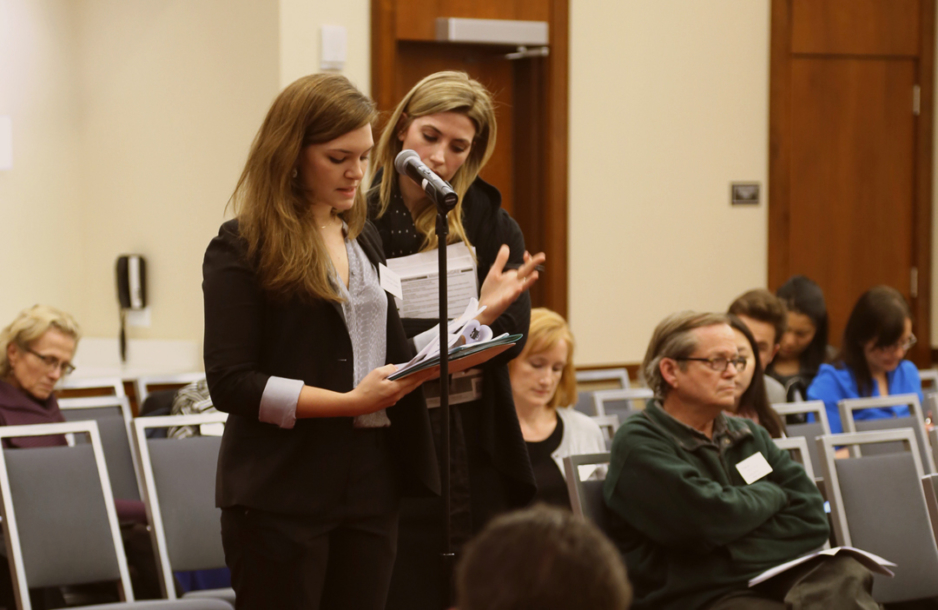
Each SPILS fellow must complete an intensive empirical research project designed to result in a significant contribution to the scholarly literature or policy debate in his or her area of concentration. Fellows receive intensive faculty advising on the development of their research projects throughout the academic year. Interdisciplinary research workshop provide fellows with a framework within which to develop their projects and receive useful feedback from faculty and international colleagues. Each fellow must give a public presentation of his or her SPILS research following its completion.

Examples of completed SPILS theses include:

  • an analysis of the failure of criminal justice mechanisms to adequately address domestic violence in Kenya, based on interviews with abuse victims in urban and rural settings;
  • an empirical analysis of Taiwanese custody cases, comparing judicial decisions made before and after a recent change in custody law;
  • a study of Spanish legal culture, and professional problems faced by young legal actors, based on interviews with lawyers, judges and prosecutors;
  • an analysis of the viability of alternative compensation mechanisms for Palestinian refugees under international human rights law in comparative historical context;
  • an analysis of tensions between Europe-wide environmental directives and national legal and administrative traditions (with an assessment of implications for handling issues of risk and uncertainty in environmental decision making);
  • a quantitative study, based on bankruptcy files and interviews, of the demography and finances of Israeli citizens who apply for bankruptcy relief;
  • a consideration of the utility of the device of the "special prosecutor" in order to facilitate efforts to constrain arbitrary executive and administrative power in South Korea; and
  • an analysis of the abolition of the death penalty in Turkey as a case study of the impact of EU membership conditionality requirements upon democratization in countries seeking EU accession.

Core Seminars

SPILS fellows are required to take the following core program courses:

  • SPILS Law and Society Seminar (3 Units, Fall)
  • SPILS Research Methods Workshop (3 Units, Fall)
  • SPILS Thesis Workshop (3 units, Winter)
  • SPILS Masters Thesis (6 units, Spring)

Course Work

In addition to the required SPILS seminars and workshops and the research for their theses (6 Units, Spring), SPILS candidates take other advanced courses or seminars offered by Stanford Law School or by Stanford University's other graduate departments or professional schools. Fellows select these courses to form a coherent program related to their areas of concentration and research projects. View the full list of courses offered by Stanford Law School.

Faculty

Stanford Law School has an exceptionally strong faculty in interdisciplinary legal studies, including law and society, law and economics, law and development, law and technology, and critical approaches to legal reform. SPILS fellows take courses from among those offered by the Law School's faculty according to their interests and research needs. Each SPILS fellow will conduct his or her research in close collaboration with two advisors: the SPILS teaching fellow and a faculty advisor with substantive expertise in the SPILS fellow's relevant field of research, chosen from among the entire Law School faculty.

For example, Professor Lawrence Friedman has recently advised fellows from Germany, Mexico, Spain, and Taiwan on a wide range of research projects related to the role of lawyers and judges in a changing society; Professor Thomas Heller has advised SPILS fellows on topics ranging from electric power industry deregulation in Peru, Japanese tax reform, European Union treaty-making powers, sustainable shrimp farming in Thailand, and entrepreneurship in Chile; Professor Lawrence Lessig has advised SPILS fellows from Germany, Romania, Chile and Kenya on theses related to information technology access and regulation; Professor Paul Goldstein has worked with fellows from Russia, Kenya, China and India on issues related to intellectual property law reform; Professor Deborah Hensler recently advised a Venezuelan SPILS fellow investigating informal dispute resolution processes in his country, and Professor Jeff Strnad recently advised SPILS fellows on theses concerning fiscal decentralization in Japan and tax competition legislation in Latin America.

SPILS Co-founders

Lawrence M. Friedman, Marion Rice Kirkwood Professor of Law and Co-Chair, Stanford Program in International Legal Studies.
Principal subjects: law and society; trusts and estates; American legal history; history of criminal justice.

Thomas C. Heller, Lewis Talbot and Nadine Hearn Shelton Professor of International Legal Studies and Co-Chair of the Stanford Program in International Legal Studies.
Principal subjects: international law and political economy; legal theory; environmental law.

SPILS Teaching Fellow

Moria Paz, SPILS Teaching Fellow

Related Programs

SPILS fellows may also participate in research workshops, seminars, lecture series, and discussion groups with faculty, graduate students, and visiting scholars at the University's other schools and research institutes. Of particular interest are programs offered by the Freeman Spogli Institute for International Studies (including the Asia Pacific Research Center, the Center for International Security and Cooperation, the Center for Democracy, Development and the Rule of Law, and the Center for Environmental Science and Policy), Stanford's area studies centers and regional research institutes (including the Center for African Studies, the Center for East Asian Studies, the Center for Latin American Studies, and the Center for Russian and East European Studies), the Stanford Institute for Economic Policy Research, and the Hoover Institution.

Contact Information

Graduate Admissions
Stanford Law School
Crown Quadrangle
559 Nathan Abbot Way
Stanford, CA 94305-8610
Phone: 650 723.4985
Fax: 650 723.0838

Related Links

Related Programs