
![]() William Rehnquist's senior year photo from the Stanford Quad yearbook, 1948. |
William Hubbs Rehnquist was born in Milwaukee, Wisconsin, on October 1, 1924. He grew up in a politically conservative household in Shorewood, a Milwaukee suburb. When Rehnquist graduated from high school, World War II was well under way, so he joined the Army Air Corps and served as a weather observer in North Africa. After the war, he attended Stanford University on the GI Bill, earning bachelor's and master's degrees in political science in 1948. Rehnquist went on to Harvard University, where he earned an MA in government, before returning to Stanford to attend law school.
Rehnquist graduated from Stanford Law School in 1952 along with future fellow Supreme Court Justice Sandra Day O'Connor. After graduation, Rehnquist clerked at the U.S. Supreme Court for Justice Robert H. Jackson. In 1953, after completing his clerkship, Rehnquist married Natalie "Nan" Cornell, whom he had met at Stanford. The couple had two daughters and one son.
Rehnquist then took a job with a Phoenix law firm and became active in the Republican party. He was appointed assistant attorney general in Richard Nixon's administration, where one of his responsibilities was to help screen potential Supreme Court candidates. In 1971, at age 47, Rehnquist was nominated to the Supreme Court by President Nixon. He joined the Court on January 7, 1972, the same day as Justice Lewis F. Powell, Jr. When Warren Burger resigned as chief justice in 1986, President Ronald Reagan nominated Rehnquist to the post, a position he has held for the last 19 years.
On a rainy, almost wintry, afternoon in May of this year, Michael Eagan '74 was ushered into the chambers of the chief justice of the United States. Eagan clerked for Justice Rehnquist in the 1976 term, and the two have remained friends ever since. As Rehnquist stood to greet Eagan, "I instinctively remarked about how good he looked," said Eagan. "And he quickly replied with a smile, 'So, did you think I was going to look bad?'" The two settled in for an informal conversation about Rehnquist's time at Stanford.
![]() Rehnquist, seated far right, with some of his friends from Encina Hall in 1948. |
Mike Eagan: Why did you pick Stanford Law School?
William Rehnquist: I'd been back to Harvard for a year at the Graduate School of Government, thinking that I wanted to get a PhD. Then after a year, I decided that wasn't for me. [He was awarded an MA in government from Harvard.] So I took an occupational test that said I should be a lawyer [laughing]. And I'd liked Stanford a lot [as an undergraduate]. To me, Cambridge wasn't nearly as nice a place to go to school in at the time.
Mike Eagan: I knew you had an interest in government because you received an MA in political science at Stanford. But you weren't really thinking about being a lawyer until you took the test?
William Rehnquist: I think not.
Mike Eagan: Why did you first decide to go to Stanford as an undergraduate?
William Rehnquist: I grew up in Wisconsin, but when I was in the Air Force, I was stationed in North Africa, where I realized that if you lived in the right place, you didn't have to shovel snow for four months a year. So I sought out a climate in the United States like North Africa to go to school.
Mike Eagan: And, of course, Stanford had that climate?
William Rehnquist: Yes.
Mike Eagan: Did the students study quite a bit, or was it more low key?
William Rehnquist: I think pretty much hard work. The first year I was in law school I was a counselor at Menlo Junior College, and the second year I was a resident assistant at Encina. I remember one thing that happened in my first year. Since I was at Menlo College [in nearby Menlo Park], I had to have some way to get back and forth to Stanford. So I bought myself a 1935 Ford. This was in 1949. One day as I was driving along El Camino Real, coming back from law school, the wheel simply came off—not the tire, the wheel. But I managed to get it off the side of the road, get it repaired, and I had that car all through law school.
Mike Eagan: Did you teach courses in political science at Menlo?
William Rehnquist: No, no. I was just supposed to be there certain evenings to see that they didn't take the roof off the place.
Mike Eagan: Were you successful?
![]() William Rehnquist, at the podium, was feted by more than 300 Stanford University faculty and alumni in Washington, D.C., on January 20, 1972, shortly after he was confirmed to the U.S. Supreme Court. |
William Rehnquist: In large part, I think so.
Mike Eagan: When you say you studied hard, did you work harder than the young men and women do these days?
William Rehnquist: It depended on the person. Basically, the law curriculum came more easily to me than it did to some others. So I probably studied less, but I certainly studied.
Mike Eagan: When you say it came more easily to you, do you mean the writing or understanding the curriculum?
William Rehnquist: Both.
Mike Eagan: Were you a good writer in those days?
William Rehnquist: I really don't know. But it seemed easier for me at exam time than it was for some other people.
Mike Eagan: How old were you when you started law school?
William Rehnquist: I was just about to turn 25.
Mike Eagan: Were the other students about that age?
William Rehnquist: Some were fresh out of undergrad. I think a majority had seen some service [in the military].
Mike Eagan: What did you want to do after law school? Did you want to be a litigator?
William Rehnquist: I think so, though I didn't know that much about what lawyers did. I interviewed with a couple of California firms and decided that San Francisco and L.A. were both larger cities than I wanted to live in, so I ended up in Phoenix.
![]() Rehnquist joined more than 400 Stanford University faculty and alumni in Washington, D.C. on November 17, 1981, to celebrate Sandra Day O'Connor's confirmation to the U.S. Supreme Court; (left to right) Rehnquist, Stanford Law School acting dean J. Keith Mann, O'Connor, and Stanford president Donald Kennedy. |
Mike Eagan: These days, all the law students clamor for summer jobs, certainly between the second and third years, and sometimes between the first and second years. Were there summer jobs in the law back then?
William Rehnquist: If you wanted to work in the summers, you worked construction [laughter]. Law firms didn't take interns then. At least not in California.
Mike Eagan: So what did you do during the summers?
William Rehnquist: I went to school.
Mike Eagan: You went straight through law school, and graduated in December, basically two and a half years?
William Rehnquist: Right.
Mike Eagan: What did you do for fun?
William Rehnquist: I played some tennis, and we would go out at night sometimes for a beer. I'm sure they don't do that anymore.
Mike Eagan: Were you married in law school, or did you first meet Nan during that time?
William Rehnquist: I met Nan during law school. We got married the year after I graduated.
Mike Eagan: Where did you live when you were in school?
William Rehnquist: First at Menlo College. Then at Encina. Then I boarded at a Mrs. Allen's house near the campus for one quarter.
Mike Eagan: Did you have any favorite courses or favorite professors at Stanford?
William Rehnquist: I certainly did. Professor John Hurlbut. [For whom the John Bingham Hurlbut Award for Excellence in Teaching is named.] He taught criminal law the first year and evidence the third year. He was just outstanding. I felt that first year generally just enlarged my mind, and he was the one principally responsible for it.
![]() Rehnquist spoke with a group of students at the Stanford Law School Board of Visitors meeting in 1983. Photo: John Sheretz |
Mike Eagan: When you say enlarged your mind, it taught you a new way to think?
William Rehnquist: Sort of an analytical ability. They say law school sharpens your mind by narrowing it. There's a lot of truth in that.
Mike Eagan: Were you friends with Sandra Day O'Connor in those days?
William Rehnquist: Oh, yeah. She was one of the entering class, but I don't think we really got to know each other until toward the end of the first year. Then I went and visited her at her family's ranch that summer. We dated some in the second year, and then we kind of went different ways.
Mike Eagan: Were there study groups back then where people would combine their efforts and study together? Or did everybody pretty much go it alone?
William Rehnquist: There was one guy with whom I studied regularly the first year. His dad was the manager of Camp Curry [now known as Curry Village] up at Yosemite. We would go up there several weekends in the off season. It was just great. But he was killed in a traffic accident. That was the beginning of second year. So I don't know that I ever resumed studying with any other group.
Mike Eagan: Was it difficult to get into the law school when you applied?
William Rehnquist: After Sandra O'Connor and I had gotten on the Court, a nephew of one of my classmates conducted a survey of how many applications Stanford got in '49, as opposed to how many were admitted. One hundred and fifty were admitted out of 230 applications. So it's almost as if you could write the check . . . [laughing]
Mike Eagan: But of the 150, two made it to the United States Supreme Court. That must have been a good 150.
William Rehnquist: It was. It was.
Mike Eagan: Speaking of writing the check, how did you finance law school?
William Rehnquist: The GI Bill. And when that ran out, I think I got a scholarship, plus I had these resident jobs, and one summer I ran the dining hall at Encina.
Mike Eagan: So with the combination of the GI Bill and some jobs, you worked your way through school.
William Rehnquist: Right.
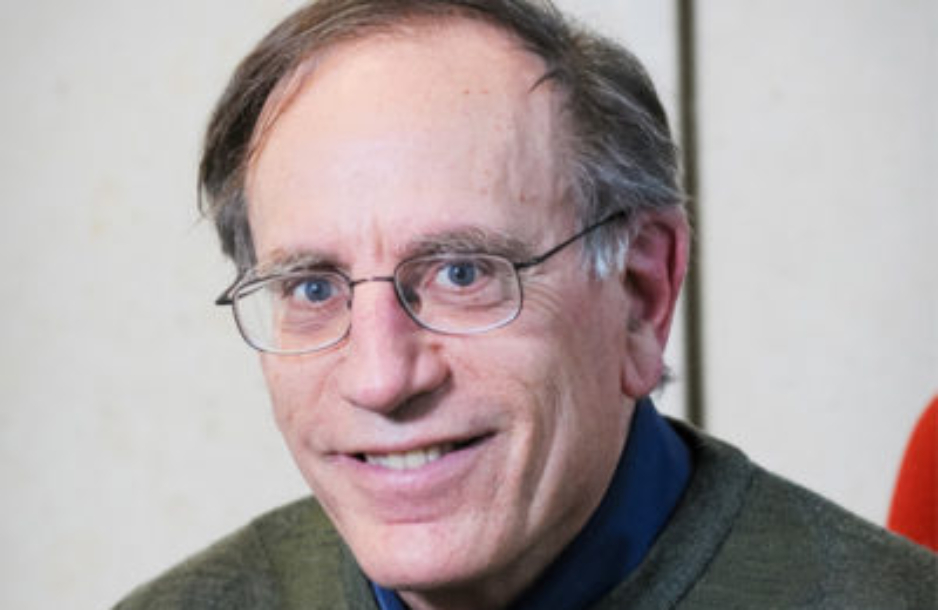
![]() Rehnquist's official Supreme Court photograph. Photo: Dane Penland, Smithsonian Institution. Collection, the Supreme Court Historical Society |
Mike Eagan: Was there such a thing as a student loan back then?
William Rehnquist: If there were student loans, I never heard about it [laughing].
Mike Eagan: But at least you exited law school pretty much debt free.
William Rehnquist: I did.
Mike Eagan: And did you go right to Phoenix or did you clerk first?
William Rehnquist: I clerked with [Supreme Court Justice Robert H.] Jackson for a year and a half.
Mike Eagan: That must have been a wonderful experience.
William Rehnquist: It was.
Mike Eagan: How did you meet Justice Jackson?
William Rehnquist: He came out to Stanford, I think to dedicate the new law school. Phil Neal, who was teaching at Stanford, had clerked for him. Phil [who went on to become dean of the University of Chicago Law School] asked me if I would like to interview with him when he came out. I said, sure. You didn't fly across the country in those days, so you didn't have the opportunity to interview with Supreme Court justices. I interviewed with him, and he said he'd let me know. Come November of 1951, he wrote me and asked if I would come back in February and clerk for him. I said yes.
Mike Eagan: Any parting thoughts?
William Rehnquist: I just want to express my thanks to Stanford for the legal education that it gave me and the friends that I made.