
New Beginnings
Research, Scholarship and News
With impact in everything from constitutional law and privacy rights to campaign finance reform and the environment, members of the Stanford Law School community shape law and policy through leading-edge research.




SLS Degree Programs
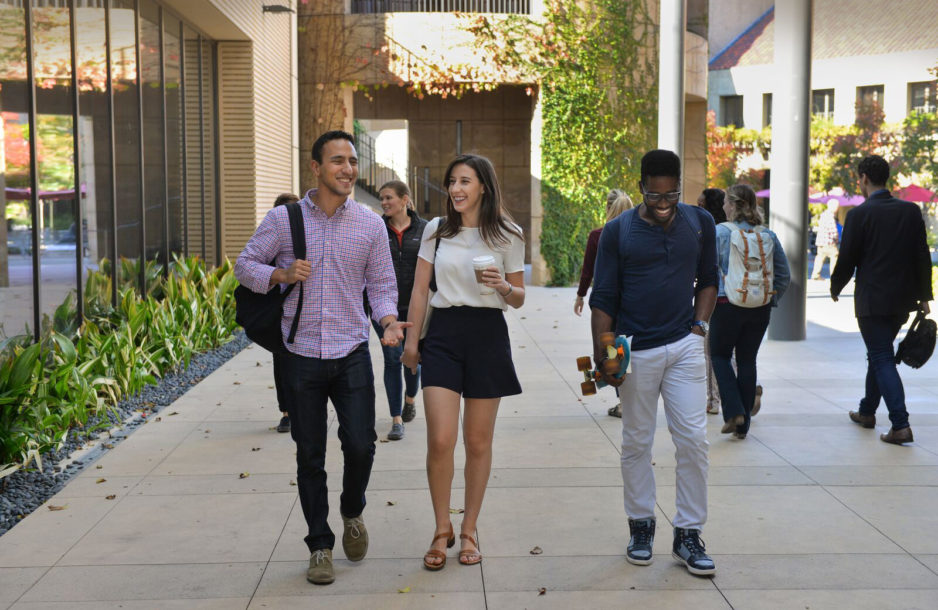

Join a diverse and inclusive community shaped by a commitment to the future.
Learn more : The JD Program
A hallmark of Stanford University and a distinct strength of Stanford Law, where students can explore the many ways law intersects with other fields.
Learn more : Joint Degree Programs
One-year master's degree programs and a doctoral degree (JSD) for international graduate students who have earned a law degree outside the United States.
Learn more : Advanced DegreesStanford Law Students Share Their Stories


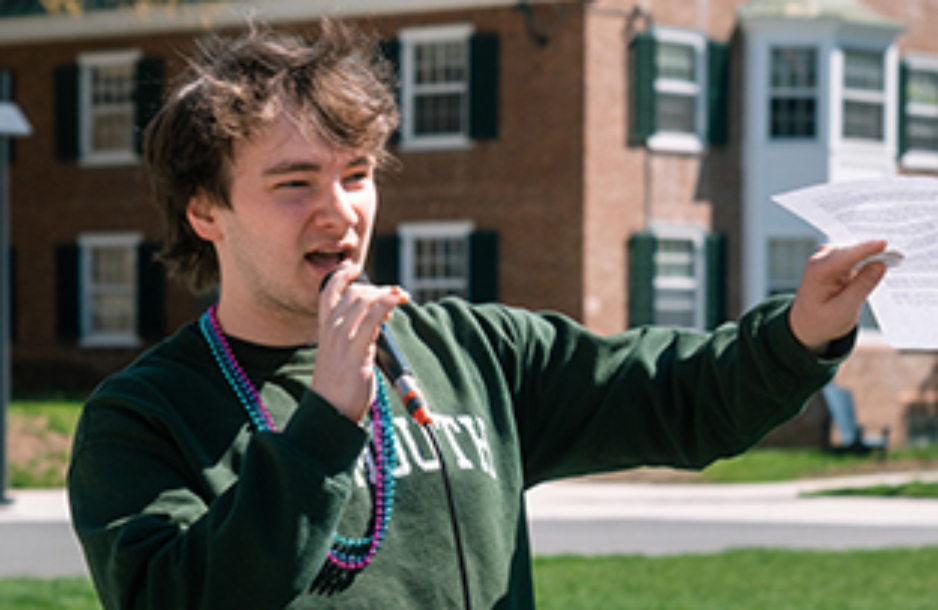


2026 LLM x Law Hackathon
The hackathon wasn’t just a competition; it was a glimpse into what becomes possible when the people who understand AI and the people who understand law are finally in the same room, building together.

Connect with Us


Ben Vagle and Will Dinneen (both JD ‘28) met during their first week at Stanford Law School—two Denver natives who instantly clicked at orientation. Within their first year of law school, they were building a company together.
Today, their company, Indexia, has helped hundreds of Read moreauthors create indexes and is nearly self-sufficient. As Ben reflects: “I don’t think at many other places I would meet someone like Will literally within a week of showing up on campus and immediately start developing a company.”
From a chance meeting to a thriving startup—this is what happens when innovation meets collaboration at Stanford Law. Read the full article through the link in bio⚖️💡


Stanford Law School’s Executive Education program is launching the Legal Engineering Academy, a first-of-its-kind, two-week residential program for attorneys, executives, and other leaders who want to move beyond talking about AI and start building with it.
Read more: Read morehttps://brnw.ch/21x5rS1
Those interested in joining the Academy’s first cohort, slated for summer 2027, can indicate their interest here: https://brnw.ch/21x5rS2

Congratulations to Promise Mabilo, winner of Stanford University’s 2026 Bright Award for Environmental Sustainability.
In Emalahleni, South Africa—the heart of the country’s coal industry—Mabilo has spent years organizing communities affected by severe fossil fuel pollution. Learn Read moremore about the winner of Stanford University's highest environmental honor, and register to attend a panel discussion and reception in her honor: https://brnw.ch/21x5pSp

California’s civil justice system often leaves people facing high-stakes legal problems on their own. The statistics are startling: Just 2% of people sued in Los Angeles debt-collection cases have lawyers. In eviction cases, only 13% of tenants are represented, compared with 92% of landlords.
Read more
Now, the California Supreme Court is considering a rule change that could help close that gap by allowing trained, supervised community justice workers to provide limited legal assistance.
In a new Los Angeles Times op-ed, Professors Nora Freeman Engstrom and David Freeman Engstrom, who co-direct the Deborah L. Rhode Center on the Legal Profession, explain why decades of research supports the reform.
“The need is urgent. The evidence is in. The solution is ready.”
Read the op-ed (subscription may be required): https://brnw.ch/21x5nZT