
New Beginnings
Research, Scholarship and News
With impact in everything from constitutional law and privacy rights to campaign finance reform and the environment, members of the Stanford Law School community shape law and policy through leading-edge research.



SLS Degree Programs


Join a diverse and inclusive community shaped by a commitment to the future.
Learn more : The JD Program
A hallmark of Stanford University and a distinct strength of Stanford Law, where students can explore the many ways law intersects with other fields.
Learn more : Joint Degree Programs
One-year master's degree programs and a doctoral degree (JSD) for international graduate students who have earned a law degree outside the United States.
Learn more : Advanced DegreesStanford Law Students Share Their Stories
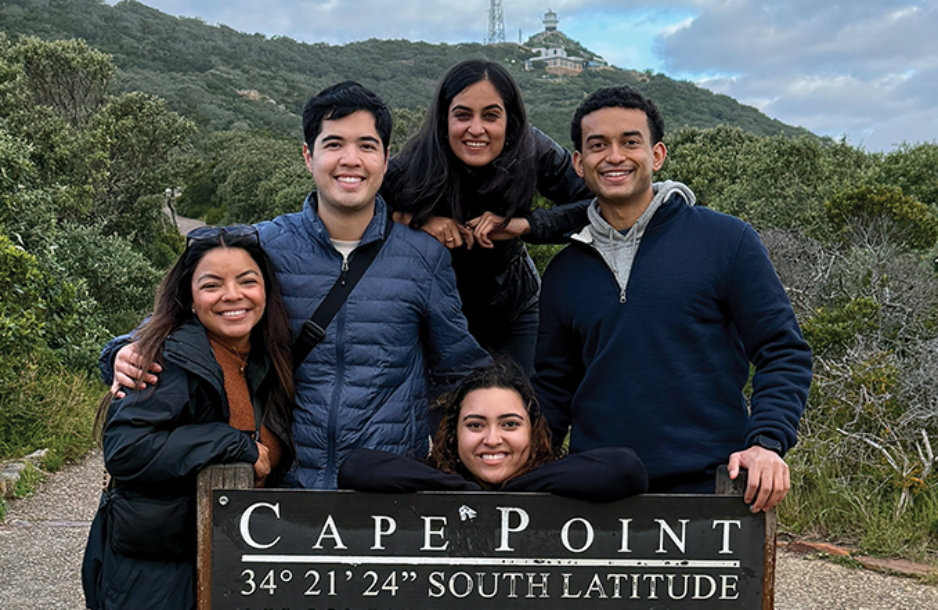




2026 LLM x Law Hackathon
The hackathon wasn’t just a competition; it was a glimpse into what becomes possible when the people who understand AI and the people who understand law are finally in the same room, building together.

Connect with Us


The Supreme Court's approach to factual evidence is raising serious concerns about judicial integrity, according to Duncan Hosie, Director of the Stanford Constitutional Law Center, writing in The Atlantic. In his analysis, Hosie examines how the Court's conservative majority has ...repeatedly disregarded evidentiary records carefully established by lower courts.
America's constitutional and procedural order gives district courts special fact-finding tools and responsibilities for good reason. The "clear-error deference" standard typically prevents reviewing courts from setting aside lower court findings unless they are clearly erroneous. However, the Roberts Court's willingness to circumvent this standard represents a troubling departure from institutional norms that protect against the substitution of ideology for legal reasoning.
When the highest court disregards the painstaking work of lower courts to document facts, it abandons a fundamental judicial responsibility—grounding legal power in evidence rather than preference.
Read the full analysis: https://brnw.ch/21x5mc2



12 graduating Stanford Law School students, infinitely valuable wisdom.
They know what it’s like to be “new” at Stanford Law School. Here’s what they have to say about the best ways to enjoy the journey and grow as a person.

Should courts use artificial intelligence? Daniel Ho, the William Benjamin Scott and Luna M. Scott Professor of Law and Director of RegLab, and Olivia Martin, JD/PhD candidate, RegLab Law Student Fellow and Knight-Hennessy Scholar, tackled this question at the D.C. Circuit Judicial Conference with ...striking findings.
Their research shows frontier AI models can analyze thousands of regulatory comments in minutes and conduct comprehensive statutory surveys—tasks that traditionally take days. But these same models exhibit critical flaws, including hallucinations and accepting fabricated legal premises.
The stakes: Without hands-on experience, courts risk falling behind litigants already using these tools—creating a dangerous information asymmetry in the courtroom.
Read their full analysis: https://brnw.ch/21x5k7l

Research from the Deborah L. Rhode Center on the Legal Profession gets a close look in the most recent New York Times Docket newsletter.
The study asks: If court records are presumptively public, why are so many federal civil filings sealed? The answer points to a system in which sealing ...requests are often uncontested, leaving judges as the public’s principal safeguard.
As study co-author Professor Nora Freeman Engstrom told the NYT’s Adam Liptak, there are legitimate reasons for secrecy and real trade-offs. But judges need to do more than simply rubber-stamp requests to seal materials that shape their decisions.
Read more in the NYT (subscription may be required): https://brnw.ch/21x5hM3
Read the Rhode Center’s policy brief: https://brnw.ch/21x5hM4